
EDITORIAL
06-02-2026 by Freddie del Curatolo

Kenya looks at 2027 as one looks at a storm on the horizon: we know it is coming, we hope it will pass us by, but in the meantime, no one is closing their windows.
There are less than twenty months to go before the next general election, and 2026 looks set to be the year when everything can still be avoided, improved, or definitively compromised.
The greatest fear is always violence and chaos. Because electoral violence here is almost never just that lazy fairy tale of eternal, evil tribalism. Rather, it is a creature that has made its lair in the heart of the nation.
The greatest fear is always violence and chaos. Because electoral violence here is almost never just that lazy fairy tale of eternal and evil tribalism. Rather, it is a creature that has made its home within the institutional system, which arises and thrives only when the conditions are right: for example, elections perceived as lacking credibility and a president in office determined to remain where he is. A planetary alignment, rather than an ethnic one.
An example is what happened a few days ago, when the former vice president and ‘friend’ of leader Ruto, Rigathi Gachagua, puppet master of the Kikuyu lobby of Mount Kenya, whose power is still unknown, claimed to have been the victim of an attempt on his life during a religious service in a church. Witnesses confirm that agents dressed as police officers fired shots, without killing him but terrifying him, his staff, and the faithful.
According to most of the majority parliamentarians, Gachagua “attacked himself” to show that the state wants to eliminate him.
The investigation is ongoing, but such a climate at the beginning of the election campaign does not bode well.
Elections.
Since Kenya returned to a multi-party system in 1991, there have been seven truly competitive presidential elections.
Serious violence has occurred only four times. And coincidentally, it has always been when the incumbent president was running for re-election, inevitably tired and inevitably unpopular. In 2002, 2013, and 2022, when the head of state was not on the ballot, the country breathed a sigh of relief, even when the results made many turn up their noses.
The lesson is simple, but rarely practiced: more credibility for elections means less freedom of maneuver for the state when it decides to “manage” the situation. After the disaster of 2007-2008, something had been learned. The 2010 Constitution had set limits, especially with a judiciary that was finally independent, capable of becoming the place where elections are contested with papers and not with machetes. Even the electoral system, in 2022, had shown signs of sufficient transparency to calm tempers.
Today, however, those achievements seem to be resting on shaky ground. And William Ruto is running for re-election.
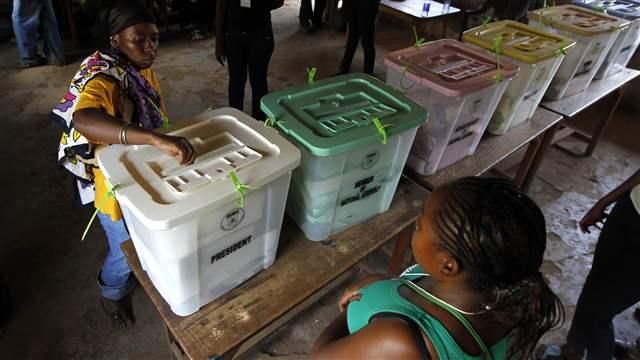
The Electoral Commission, the IEBC, was only reconstituted in July last year, and already badly. The president initially ignored a court order blocking the appointment of commissioners, then everything went ahead amid appeals, controversy, and suspicion. The result: a commission born without credibility. The November by-elections, chaotic and violent due to dozens of vacant seats, finished the job. Public confidence, what little remained, left the room slamming the door behind it.
But it is not only the IEBC's fault. The Kenyan media bear as much responsibility as their silence on the front page. For years, for fear of upsetting the powers that be, they have treated the announcement of election results as a sacred ritual to be left to the official bodies. This timidity has undermined democratic credibility.
2022 was a missed opportunity. The polling station data was public, available, ready to be aggregated. Yet the media appeared unable, or unwilling, to explain what was happening in real time. In 2027, this will no longer be acceptable. There is time to invest in data journalism, to collaborate, to prepare to say who won even when the result makes those in power uncomfortable. Either we do this, or we remain complicit by omission.
In the meantime, disinformation runs rampant. And it runs better and better. Kenya was one of the early laboratories of digital manipulation, when Cambridge Analytica experimented with electoral microtargeting here as early as 2013, before the world discovered the scandal. Today, artificial intelligence raises the stakes: fake audio, credible videos, imitated voices, narratives tailored to each community. In contexts where institutional trust is already a distant memory, all this not only confuses: it destabilizes. It paves the way for chaos or repression, depending on which comes first.
And then there is the world around us. The regional and international pressures that once helped to curb the violent appetites of the Kenyan elite are evaporating. In Tanzania and Uganda, pre-election repression is now normalized.
Globally, Western support for the massacre in Gaza has helped to crumble the last vestiges of international accountability, weakening institutions such as the International Criminal Court and making the world a much more permissive place for those who rule with an iron fist.
In this context, as New Humanitarian columnist Patrick Gathara points out, Kenya has only one option left: to strengthen its internal defenses.
But time is running out. The Kriegler Commission, established by the Kenyan government in February 2008 to investigate all aspects of the presidential elections, recommended that any electoral reform be completed at least two years before the vote.
That deadline has already passed, without anyone rushing to meet it.
Yet 2026 can still be a useful year. A year to rebuild civic coalitions, as in the 1990s, when civil society, the church, and the media were able to act as a bulwark against the state. The protests of Generation Z have shown that young people are not just numbers in statistics. They will return to the streets, probably soon. The real question is whether adults will have the courage to join them.
Violence is not inevitable. But avoiding it requires quick decisions, protected institutions, alert media, and citizens willing not to look the other way.
Time, as always, does not pass quickly here, but at the same time, it waits for no one.


KENYA NEWS
by redazione

The Senate last night gave the green light to the removal of the vice-president of the ...
POLITICS
by redazione

The date of the new elections in Kenya could be postponed.
This is what the IEBC Electoral Commission would have reported yesterday evening to the national daily Daily Nation, after receiving a dossier on the telematic organisation of the forthcoming...
POLITICS
by redazione

The new presidential elections in Kenya will take place on Thursday 26 October instead of Tuesday 17 October.
Confirmation is open the day after the Supreme Court of Kenya's publication of the judgment annulling the previous elections.
Elections that have...

Kenya's two leading presidential candidates have finally chosen, taking advantage until the last of the...
POLITICS
by redazione

The Electoral Commission of Kenya IEBC rejected the statement by the leader of the Opposition leader Raila Odinga announcing that he was renouncing to run for the Kenyan Presidency in the new elections, scheduled for 26 October next.
POLITICS
by redazione
Uhuru Kenyatta would be confirmed President of the Republic of Kenya.
This says the most recent survey of the specialized agency IPSOS, which reports the leader of the government party to...
NEWS
by redazione

After the deadline for filing an appeal against the results of the 9 August elections, which saw outgoing...
NEWS
by redazione

There will be 150,000 employees of national law enforcement agencies called for peace in view of the upcoming government elections scheduled for August 8th. The agents will be used from the official start of the campaign, scheduled for May 29.
NEWS
by Freddie del Curatolo

It started as a really tight and jumping head-to-head, the vote count for the 2022 presidential election in Kenya.
As of 9pm...
by redazione

Presidential elections in Kenya are held regularly from this morning to 6 p. m.
These are the votes...
by redazione

Today, exactly twenty days after its pronouncement, the Supreme Court of Kenya has read the entire reason for the cancellation of the elections on 8 August 2017.
On 1 September, announcing to the country and the whole world that Uhuru...
POLITICS
by redazione

The elections in the Opposition strongholds (the region of Nyanza, namely Kisumu, Homa Bay, Migori, Syaya and other smaller districts) were postponed to a date to be set aside.


