
KENYA NEWS
08-05-2026 by Freddie del Curatolo

They call them “informal mines,” because saying “illegal”—when the people profiting from them are above suspicion or have received approval to operate that way—cannot be equated with criminal activity.
But when an informal gold mine collapses in Kenya, people mourn citizens who are forced to hope that these non-compliant sites—with undocumented workers and poverty-level wages—will not be shut down.
It is the harsh African reality of earning just enough to scrape by.
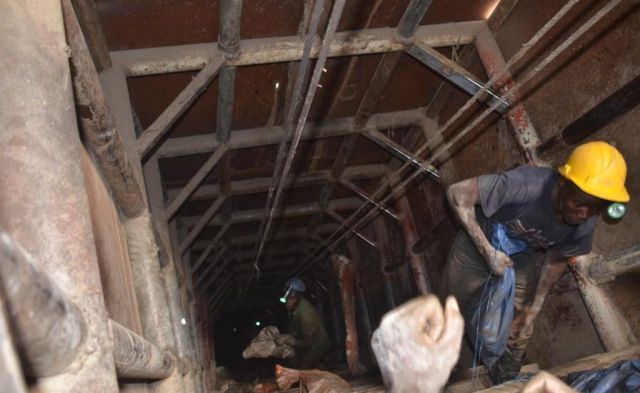
In Rumos Hills, in West Pokot County, gold has once again turned to mud, stone, and death. The provisional death toll from the collapse of an artisanal mine continues to rise: fifteen confirmed deaths, including ten women, dozens of injured, and the fear that other miners are still trapped underground. Teams from the Kenyan Red Cross, along with police, volunteers, and local residents, have been digging for hours through unstable rocks and crumbly soil, because, they say, sounds and cries for help are still coming from down there.
The tragedy was reportedly caused by the collapse of a massive boulder that fell onto the section where the miners were working. A scene that in Western Kenya no longer surprises almost anyone, and perhaps this is precisely the worst tragedy: the acceptance of death among the poor. The kind of death that doesn’t really interrupt anything, doesn’t stop work, doesn’t change the rules, doesn’t spark political revolutions. It produces only funerals and a few official statements.
Injured people continue to arrive at Kapenguria Referral Hospital. Some have undergone emergency surgery; others are fighting for their lives. Yet, while doctors and nurses try to save those pulled out alive, in the hills of West Pokot there are already people ready to go back underground. Because when the alternative is going hungry, the risk becomes a mere administrative detail.
The county governor, Simon Kachapin, had denounced the rise in illegal and unsafe mining activities in the region just a few days ago. But in Kenya, the word “illegality” is as elastic as the concept of responsibility. If it’s desperate people armed with shovels doing the digging, the law arrives immediately. But if behind the informal mines there are vested interests, protection rackets, small-time local bosses, gold trade middlemen, and politicians who turn a blind eye, then everything becomes “artisanal,” “informal,” “traditional.”
West Pokot has been living with these collapses for years. Last October, four people, including a fourteen-year-old boy, died in similar circumstances in the Kampi Karayi area. A few months earlier, in Turkwel, another mine collapse had killed four more workers. The news story changes the date and the village, but the script remains the same: people dig where they shouldn’t, without safety measures, without oversight, without rights. And above all, without alternatives.
African gold has always been cursed in the same way, through colonialism, independent governments, and neocolonialism: it makes almost everyone rich, except those who extract it. And in the red hills of West Pokot, where the earth continues to crumble onto the poor, it seems that even death is extracted with bare hands.


STORIES
by Freddie del Curatolo

In Siaya, gold does not glitter. Rather, it scratches. It scratches the skin, dignity, memory....
FREDDIE'S CORNER
by Freddie del Curatolo

Mabati
is a poacher's story
that begins...
ENVIRONMENT
by redazione

A special identity card to distinguish authentic Kenyan fishermen with regular permits from sea...
NEWS
by redazione

The misadventure of Paolo Brondi, the retired Italian frequent visitor to Watamu who was stopped at Mombasa...
INSIDE KENYA
by Freddie del Curatolo
Africa has spent centuries mining to enrich someone else. First it was the colonial powers, then...
NEWS
by redazione

For the first time the online platform Netflix will broadcast a film produced and...
SOCIAL
by Leni Frau

It is not possible to pretend nothing happened or, worse, to exploit their image just to denounce...
ENVIRONMENT
by Leni Frau

Timber smuggling could be more deleterious to the destruction of a territory than animal smuggling.
Let's be...
EVENTI
by redazione

It's a group of Italian women, headed by Rita Valentini, to organize in Malindi each year the "Flash Mob" against violence against women, which takes place simultaneously in the streets around the world.
It is a choreography to the tune...
EDITORIAL
by Freddie del Curatolo

In a ruling that many were quick to call historic, a few days ago Kenya's Supreme Court overturned after...


