
KENYA NEWS
28-09-2026 by Freddie del Curatolo

For years, Kenya has been telling the world about its commitment to renewable energy. One of the first and the best in Africa for that.
Sun, wind, geothermal power: a nation that seems to have decided to generate electricity without waiting for oil to make its way round the globe. But even the sun, it seems, must play by the rules. And, above all, it cannot simply set itself up as a supplier to Kenya Power.
The Energy and Petroleum Regulatory Authority’s (EPRA) new focus does not, as one might assume from certain headlines, concern anyone who has installed solar panels.
The target is systems connected to the Kenya Power grid that feed electricity into the grid without authorisation or a net metering agreement.
This is what the new legislation defines as dumping: privately generated electricity which, instead of simply being consumed by the system owner, is fed into the public grid without Kenya Power’s consent.
And this is where the minor bureaucratic detail becomes crucial.
Kenya has, in fact, already established a system through which households and businesses can generate renewable energy for their own consumption and feed any surplus into the grid. It is called net metering and is governed by the Energy (Net-Metering) Regulations, 2024, published by EPRA.
The system’s capacity can be up to 1 megawatt, but a formal agreement with Kenya Power is required. In short: the sun is free, the panels a little less so.
There are also quite a few Italians, particularly in Watamu and Malindi, who, fed up with constant power cuts, have opted for solar power. Not all of them, however, were apparently aware of the regulations required to do so without becoming electricity smugglers.
Kenya does not want an ‘accordion-like’ electricity grid
The reason for the crackdown is not merely financial.
Kenya Power argues that the growth of intermittent renewable sources, particularly solar and wind, makes it more difficult to maintain a stable electricity system. When generation fluctuates rapidly, the grid must compensate by increasing or reducing output from other generation sources.
According to data cited by the company, solar and wind power together accounted for 34 per cent of the energy mix during peak daytime demand hours.
The problem, therefore, is not that a citizen generates their own electricity. On the contrary: it is precisely one of the avenues in which Kenya is investing to reduce its dependence on fossil fuels.
The problem arises when everyone starts behaving like a small independent power station, connecting to the grid and feeding energy back into it without the operator knowing exactly when, how much or what the characteristics are.
After all, the national grid is not simply a huge extension of the cable coming out of one’s own inverter.
Those who generate for their own use have nothing to fear
Perhaps the most important clarification is this: having solar panels on your roof does not automatically mean you are liable for penalties.
Anyone who uses the energy produced by their own system for domestic or business consumption is not affected by the new surcharge simply because they own a photovoltaic system.
The issue concerns energy fed into the Kenya Power grid without authorisation.
For those who wish to sell or credit excess energy to the grid, there is the standard net metering process.
And here, Kenya is attempting to do what many economies – which are now seeing a boom in photovoltaics – are already doing: transforming millions of potential small-scale producers into a resource for the grid, whilst ensuring the grid does not turn into a jungle of electrons.
The paradox of the ‘Land of the Sun’
It is yet another of the minor contradictions of Africa’s energy transition.
Kenya has one of the most renewable-energy-oriented electricity mixes on the continent and continues to focus on geothermal, hydro, wind and solar power. EPRA itself identifies the development and regulation of renewable energy as one of its core tasks.
But the more sunlight enters people’s homes, the more bureaucracy is needed to keep up with it.
And so the country that for years has been trying to convince Africans to install solar panels on their roofs now finds itself having to explain that, yes, you can generate your own electricity; yes, you can even sell some of it back to the grid; but first you have to fill in a few forms.
Because in Kenya, even the sun, once it starts making money, must have its paperwork in order.


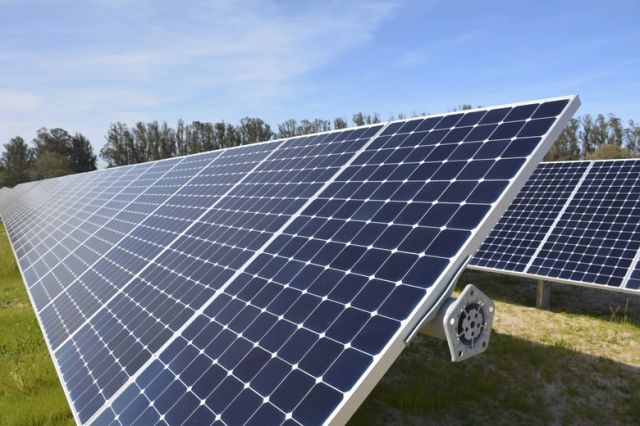
More and more companies, individuals and even public bodies in Kenya are relying on solar energy...
ENERGY AND RISKS
by redazione

Kenya insists on nuclear energy, and aims to build its first power plant on the coast, starting...

Beginning this year, presumably, Kenyan citizens and foreigners residing in Kenya will be able to legally...

Italian fertilisation plants to raise agricultural production standards and reduce costs and carbon...
NEWS
by redazione

Kenya will be one of the few countries in the world from which the annular solar eclipse will...
NEWS
by redazione

Another step forward for Kenya in protecting the environment and against pollution: Daniel Arap Moi Airport in Mombasa is the first on the African continent...
by Freddie del Curatolo

There is a revolution that makes no noise, does not fill talk shows and does not interrupt...
ENVIRONMENT
by Leni Frau

Kenya's 'green' vocation does not stop and indeed, with the acceleration of the United...
KENYA NEWS
by redazione

President William Ruto, with his deputy Kithure Kindiki, has been on the Kenyan coast for a few days...
ENVIRONMENT
by redazione
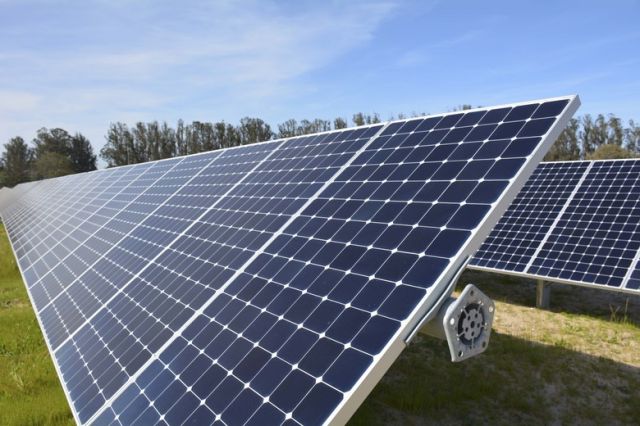
The first solar system that makes drinkable water from the Indian Ocean has been installed in Kiunga, in the...
COOPERATION
by redazione

Aid to the sustainable biofuels supply chain in Kenya is increasingly speaking Italian, including opportunities in...


