
INSIDE KENYA
09-11-2026 by Freddie del Curatolo
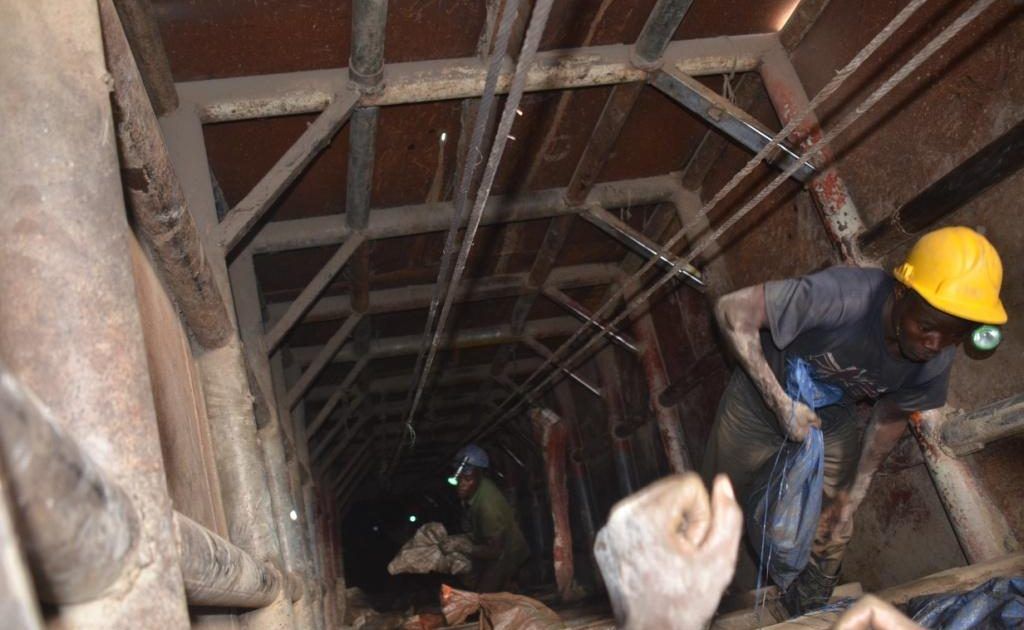
Africa has spent centuries mining to enrich someone else. First it was the colonial powers, then the multinationals; today it is trade agreements, new technologies and the global race for strategic minerals. Kenya has every right to look beneath its own feet and envisage a more prosperous future. But it would be a shame, as well as a mistake, if, in extracting wealth from the earth, it ended up robbing its children of the most precious thing of all: the time to grow, learn and dream.
A media investigation into the gold mines of Siaya and Migori highlights a problem that has long plagued mining in Africa: child labour and school dropouts – consequences of poverty that risk undermining the promises of development.
The daily newspaper *The Star* reports on a situation that particularly affects the regions of Siaya and Migori in western Kenya, where artisanal gold mining provides a livelihood for thousands of families.
Among those featured in the report are young people who have already learnt to handle hammers, drills and ore, whilst they should be busy preparing for their school exams.
Brian, aged 15, is in Year 9 and dreams of becoming a pilot. He started working in the mines in 2024, helping his mother pay school fees and household expenses. On a good day, he can earn a thousand Kenyan shillings. The cost, however, is missed lessons, difficulty keeping up with the curriculum and physical risks that no teenager should have to face.
Jay, aged 17, is currently preparing for his final secondary school exams. He has been working in the mines for two years and says he has lost count of the school days he has missed. He too would like to continue his studies, but the need to help his family takes precedence over his personal aspirations.
Then there is Sly, a schoolgirl who would like to become a teacher. Working in the mines has already compromised her academic performance, forcing her to come to terms with a future that risks slipping away just as she is trying to build it.
These are not necessarily families who do not believe in education. On the contrary, many parents say they want a better life for their children than they themselves have had. But when there is no money for food, school uniforms, books or school fees, even school can become a luxury.
Child labour: a ‘wealth’ that impoverishes
The working conditions described in the investigation are particularly worrying. Children may be employed in mining operations, in crushing rocks or in the surface processing of ore. The latter, often carried out by women and children, is not necessarily any less dangerous.
Exposure to dust, the risk of cave-ins, the lack of protective equipment and the possibility of serious accidents make mines environments incompatible with the protection of children.
Added to this are the consequences for their health, dignity and the right to a normal childhood.
According to estimates cited in the article, in Kenya around 1.3 million children aged between 5 and 17 are involved in some form of child labour. This figure shows that the problem is not confined to mines, but affects a significant section of society.
Kenyan legislation, from the Constitution to the Children’s Act of 2022, protects children from hazardous work and exploitation. The problem, as is often the case, is ensuring that these regulations do not remain mere words on paper.
Kenya and the new race for resources
The issue takes on even greater significance at a time when Kenya is seeking to expand its mining sector, attracting capital and forging agreements with international partners, from the United States to China, and other countries interested in Africa’s strategic resources.
The government aims to increase the contribution of mining activities to gross domestic product from the current level of less than 1 per cent to 10 per cent by 2030, according to the targets announced by Minister Hassan Ali Joho.
The vision is of a country capable of making the most of its resources, creating jobs, developing processing industries and increasing public revenue.
However, the experience of other African countries – from the Democratic Republic of the Congo to various parts of the continent – suggests caution is warranted. Mineral wealth does not automatically translate into widespread prosperity. It can generate new opportunities, but also inequalities, exploitation, and social and environmental conflicts.
In Kenya, too, plans to mine niobium and rare earths at Mrima Hill, in Kwale County, have already raised concerns amongst farmers and local communities about the potential impact on their land, traditional livelihoods and cultural heritage.
The hope is that Kenya will get it right
This is not about demonising mining, nor about denying Kenya the chance to exploit its own resources. That would be an unrealistic and even unfair stance towards a country in need of jobs, investment and development.
The issue is another: who will benefit from this new wealth?
If mining concessions lead to formal employment, vocational training, decent wages, workplace safety and resources for communities, they could represent a genuine opportunity.
If, on the other hand, the sector’s growth were to come at the expense of the most vulnerable – with children forced to leave school to contribute to the family income – Kenya would risk building a fragile prosperity, destined to reproduce the very inequalities it is currently seeking to overcome.
Frequent inspections, accountability from operators, financial support for the poorest families and investment in education are needed. Above all, companies – both local and foreign – must be held to account for complying with the law and ensuring that child labour does not become a shortcut to cutting costs.
The real hope is that Brian can become a pilot, Jay can pass his exams and Sly can one day teach in a Kenyan school.
May their dreams not be considered any less precious than the gold they are forced to seek.
For a country can become rich by mining its own mountains. But it only truly becomes great when it allows its children to study, to grow up and to choose their own future freely.
And that would be one of Kenya’s most important achievements: to succeed in extracting wealth from the earth without, at the same time, robbing its children of their childhood.


There is a huge deposit of gold underground in Kakamega County in Kenya.
The news...
NEWS
by Freddie del Curatolo

Recently, Kenya's chief inspector of mines, Philip Kirui, announced that, like other African nations, Kenya...
INSIDE LAND
by Freddie del Curatolo

At a time of severe economic crisis in the country, the new discovery announced by Kenya's Minister of Mineral...
NATURE
by Leni Frau

Kakamega Forest is the last corner in Kenya of the great tropical rainforest that stretched across...

Kenya is betting on adventure tourism in the northwestern regions of the country. The northwestern...
NEWS
by redazione

A dramatic, inexplicable tragedy killed 14 primary school pupils in the town of Kakamega in northern...
REPORTAGE
by Freddie del Curatolo

They say that where there are red rocks there is an iron smell...
EDITORIAL
by Freddie del Curatolo

The land of Kakamega has never been silent.
The forest...
BOOKS OF AFRICA
by Freddie del Curatolo

Her name (and not her art name) is Diana Facile, but to the readers of her travel blog she is...
CORONAVIRUS
by redazione

Kenya is worried, and the news coming from other African countries, particularly neighbouring...
KENYA NEWS
by Freddie del Curatolo

They call them “informal mines,” because saying “illegal”—when the people profiting from them are above...
by Leni Frau

The Kenyan government has said enough is enough, or at least that is the intention: the...
LATEST NEWS
by redazione

This could be the latest attempt by the NASA opposition alliance to postpone national elections in Kenya, set for August 8th, and it failed.
The faction headed by Raila Odinga, who has been gaining approval over the past few weeks...


