
KENYA NEWS
28-05-2026 by Freddie del Curatolo

Seven hundred tropical marine animals crammed into plastic bags for a five-day journey from Kenya to Argentina.
Not a dystopian film, not a fantasy about South American traffickers with an aquarium in their living room, but yet another true story of international trafficking that manages to transport protected fish, starfish, octopuses and coral creatures from the Indian Ocean all the way to Buenos Aires – creatures that may never have seen the light of day before dying inside a cargo container.
One really has to wonder: how on earth do hundreds of protected marine animals manage to leave Kenya, cross half the planet and end up in Argentina?
And above all: to go where?
Into the aquariums of some bored collector?
Into living rooms where a lionfish becomes an exotic piece of décor amongst the whisky and sofas?
There is something deeply surreal about this story.
More than a seizure, it seems like the script for a contemporary global delusion: just over 700 tropical marine animals from Kenya, destined for the illegal ornamental aquarium trade, were intercepted by the Argentine authorities at Ezeiza International Airport, near Buenos Aires, after a journey lasting around 120 hours.
Five days.
Five days inside plastic bags, cargo boxes and intercontinental holds, for creatures born amidst the warm currents of the Indian Ocean’s coral reefs.
Many specimens arrived dead. The others were barely alive.
Surgeonfish, butterflyfish, pufferfish, lionfish, starfish, crabs, octopuses and other protected or otherwise extremely delicate tropical species were destined, according to investigators, for the international ornamental trade – that surreal, billion-dollar market that transforms pieces of the ocean into decorative accessories for private aquariums.
But the question that should be ringing loud and clear from the Kenyan coast all the way to Nairobi is another: how did all these animals manage to leave Kenya?
Because 709 animals belonging to 102 different species do not simply vanish into a diplomatic bag or the rucksack of an eccentric tourist. A network is needed. It requires permits, complicity, logistical corridors, silence, airports passed through without too many questions, and someone willing to turn a blind eye along the chain.
And it is even harder to understand why the destination was Argentina, on the other side of the planet, in one of the longest and most absurd journeys imaginable for tropical marine animals. A journey that for many of them simply became a slow agony.
According to the Argentine authorities, who carried out the raid alongside the Environmental Control Brigade, customs, the health agency Senasa, IFAW and the Fundación Temaikèn, the shipment was destined for the ornamental aquarium and exotic collection market.
A business that continues to grow worldwide whilst coral reefs are slowly being emptied, piece by piece, fish by fish.
At the Fundación Temaikèn, the only facility in Argentina equipped to receive confiscated marine fauna, vets and specialists worked for over twenty-eight consecutive hours in an attempt to save the surviving specimens. Additional tanks, filtration systems, acclimatisation procedures one by one, animals treated as intensive care patients after days of logistical torture.
And yet there remains that grotesque feeling that always accompanies such trafficking: modern humanity managing to connect Nairobi to Buenos Aires in less than a week, but failing to prevent a tropical fish from being turned into contraband.
IFAW representative Christian Plowman has described this trafficking as “an industrialised crime”. And that is probably exactly the right term. Because we are no longer talking about amateur poachers or a few fishermen selling seahorses on the sly. Here we have an international organisation, global demand and a supply chain capable of moving entire ecosystems as if they were electronic components.
So far, the names of those responsible for the shipment have not been disclosed, nor has it been revealed whether any arrests have been made. Even the Kenya Wildlife Service, contacted by the Associated Press, did not issue any immediate comments.
And perhaps it is this silence that is the most disturbing part of the story.


It has been a long time since the Kenya Wildlife Service in Watamu has been forced to arrest a sea turtle...
NEWS
by Leni Frau

For the past two years, Kenya has had a law passed in parliament that is supposed to punish those who...

The last seizure took place yesterday in Vietnam, a hundred pounds of rhino horns from Kenya, reports the sad topicality smuggling related to protected species of the African savannah.
The battle against poachers who kill elephants also proceeds with encouraging...
ADVICE
by Freddie del Curatolo

With the return of mass tourism to Watamu and Malindi, the imbecile fashions are also ...
ADVICE
by Freddie del Curatolo

With the return of mass tourism to Watamu and Malindi, the imbecile fashions are also returning, favoured ...
MARINE ENVIRONMENT
by Pasquale Ariano

Our collaboration continues with a distinguished and passionate Italian living in Kenya, Dr Pasquale...
WILDLIFE
by Leni Frau
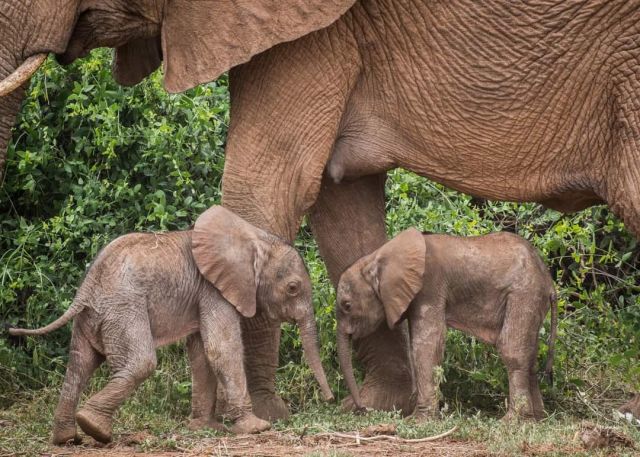
From one of the most remote and fascinating national reserves of Kenya, Samburu, comes...
ENVIRONMENT
by Leni Frau

With all the problems caused by the lack of tourism in Kenya over the past year, due to the...
ENVIRONMENT
by Leni Frau

A group of women are reviving the coral reef around the island of Wasini, south of...
EVENTS
by redazione

The local "cult" of the sunset of Watamu, and not only, resumes its Fridays between...
EVENTS
by redazione

A Kitesurf tournament of national importance to support the protection of sea...

Twenty km before Malindi, after Chumani and Matsangoni villages, you will find Mida creek, covered with forests of mangroves, plants whose roots grow in the salt water. At Mida extremely rare birds are present, like the african fish eagle, the...
ENVIRONMENT
by redazione

NEWS
by Freddie del Curatolo

We were accustomed to ivory smuggling (just a few days ago two poachers were sentenced in the...


