
WILDLIFE
20-11-2026 by Freddie del Curatolo
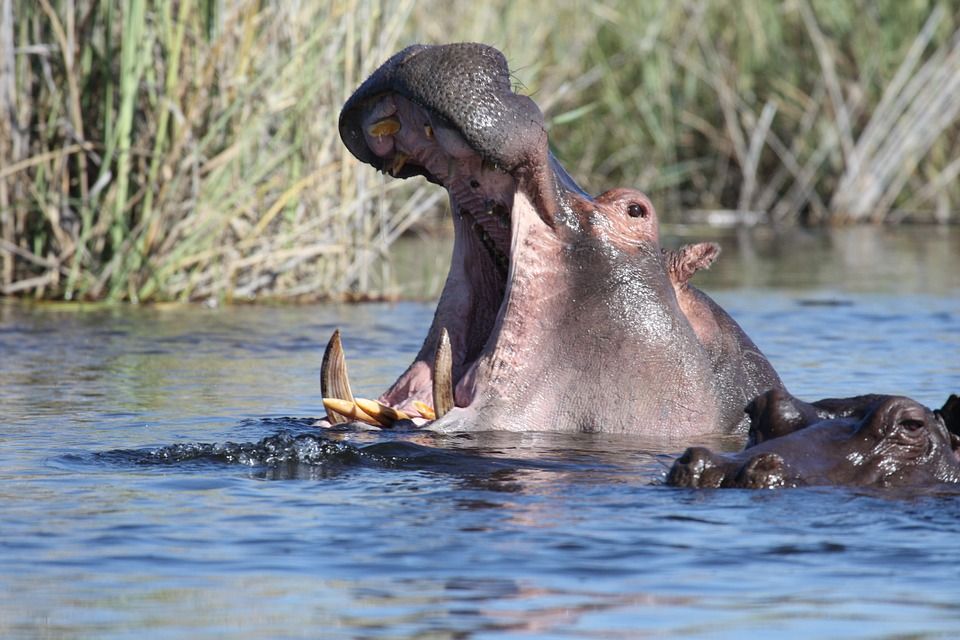
No poisoning, nor – perhaps even worse – a new epidemic. But human activity is still to blame for the deaths of a number of hippos in Lake Naivasha.
For days, the worst had been feared. The hippos found dead on the shores of the lake had fuelled suspicions and raised questions about the health of the ecosystem. The explanation provided by the veterinary examinations is, in some ways, even more bitter: one died after swallowing an abandoned fishing net, another from eating too much maize. Two victims of an environment in which humans and wild animals are increasingly sharing the same spaces, but not always the same chances of survival.
According to a statement from the Kenya Wildlife Service, veterinary examinations have identified two very different causes of death for the two hippos found dead.
In the first case, a sub-adult female had swallowed a synthetic fishing net abandoned in the lake. The material had compacted within her digestive tract, causing a complete blockage in the passage between the stomach and the small intestine. The consequences were extremely serious: cardiopulmonary failure, hypovolaemic shock and endotoxemia.
In the second case, an adult female had instead ingested an excessive amount of maize stalks. The fermentation of the plant matter had caused a massive build-up of gas in the stomach, leading to such severe distension that it pushed the diaphragm towards the thoracic cavity and compressed the lungs. The animal was subsequently unable to breathe normally, leading to cardiopulmonary collapse.
The KWS has urged fishermen, local communities and Beach Management Units to pay greater attention to the management of nets and fishing gear, ensuring they are not left abandoned in the aquatic environment, and to prevent wild animals from gaining access to potentially harmful materials or food.
This clarification is important because, in the weeks leading up to the deaths, the deaths of several hippos had raised fears of a mass poisoning incident. Reports had concerned at least six animals, but not all were recovered and examined. The post-mortems on the two specimens therefore shed light on those specific incidents, though not necessarily on the entire sequence of deaths.
When the lake encroaches on land and the animals follow
The Naivasha story does not end with a fishing net and a maize field. For some time now, the relationship between the hippos and the communities living around the lake has become problematic.
Rising water levels have submerged parts of the grazing areas usually frequented by the animals, forcing them to seek food further from the shores, even on farms and in inhabited areas. Hippos have been spotted with increasing frequency in fields, on private land and along roads, whilst fishermen wading through shallow waters report dangerous encounters and attacks.
According to the Wildlife Research and Training Institute, a previous census had recorded over 500 hippos in the lake, a population considered compatible with the ecosystem’s capacity. The problem, therefore, is not merely how many animals live in the basin, but how much space and how many resources remain available to them.
The hippopotamus, an animal that appears placid whilst floating in the water, is one of the most dangerous of Africa’s large mammals to humans. It can become aggressive when it perceives a threat, especially if it has to cross areas frequented by people to reach its feeding grounds.
But humans, too – often without realising it – can become a deadly threat: an abandoned net, a cultivated field too close to its habitat, rubbish and agricultural waste all become traps in a landscape where the distinction between natural spaces and human activities was once much clearer.
Elephants: the great losers of forced coexistence
Whilst in Naivasha it is hippos that end up in the fields and forage amongst the crops, in many other parts of Kenya it is elephants that represent the most visible face of the conflict.
In the ecosystems of Amboseli, Tsavo, Laikipia and various parts of the Rift Valley, agricultural expansion, human settlements and the progressive fragmentation of migration corridors are increasing the opportunities for contact. Elephants cross cultivated land, knock down fences, destroy crops and sometimes cause the death or injury of those who try to drive them away.
It is not difficult to understand the anger of a farmer who sees an entire season’s work destroyed in a matter of hours. Nor that of a family who loses a loved one in an encounter with a wild animal. Wildlife conservation, when it entails daily costs and risks for those living alongside the parks, cannot be merely a matter of national prestige or tourist appeal.
Last August, the death of sixteen elephants in the Amboseli ecosystem dramatically refocused attention on the issue. Investigations had considered the possibility of cyanide contamination, whilst initial tests had detected tomatoes in the animals’ stomach contents. Farmers in the area had contested the suggestion that their crops were the cause of the poisoning. The circumstances and the source of any toxic substance remained under investigation.
This is an example of just how delicate the relationship between conservation and agriculture is: the very same land that represents an economic resource for local communities can also become a route and a source of food for animals.
The cost of wildlife
The Kenyan government has established a compensation scheme for victims of wildlife-related incidents, which includes compensation for deaths, injuries, crop destruction and damage to property.
In May 2026, in Tana River County, 225 beneficiaries received a total of 172 million Kenyan shillings for claims arising between 2024 and 2026. Some claims dated back ten years. The national programme provides for compensation of up to five million shillings for a death and three million for permanent disability.
In May 2025, President William Ruto announced that procedures would be fast-tracked, noting that 2.8 billion shillings had been paid out to those affected over the previous two years and promising to drastically reduce waiting times.
But the problem is not merely financial. Compensation, even when it arrives, does not bring back a family member, does not immediately restore a crop, and does not eliminate the fear of encountering an elephant on the way home.
Figures from the Kenya Wildlife Service for the 2024–2025 financial year illustrate the scale of the problem: 9,929 incidents of human–wildlife conflict were recorded during the year. These included 131 human deaths, 341 injuries, 5,596 cases of crop destruction, 515 incidents of animal mortality, 573 cases of property damage and 2,772 cases of livestock predation.
These figures point to a national emergency, not a series of isolated incidents.
There can be no conservation without coexistence
Kenya has built a significant part of its international identity on the protection of wildlife. Elephants, lions, rhinos, giraffes and hippos are part of the country’s natural heritage, but also an essential component of the tourism economy. Parks and reserves attract visitors from all over the world and help to support thousands of families.
Yet, outside the boundaries of protected areas, coexistence is becoming increasingly complicated. Migration corridors are cut off by roads, fences and settlements; wetlands are being transformed, lake levels are changing, crops are encroaching on habitats and pressure on resources is mounting.
Solutions require protected ecological corridors, early-warning systems, appropriate fencing, rapid intervention by the KWS and, above all, the involvement of local communities, who cannot simply be regarded as an obstacle to conservation.


REPORTAGE
by Freddie del Curatolo

A walk among the herbivores that are usually found in the boundless and dangerous savannah or...
WILDLIFE
by redazione
It's a desperate operation to save hundreds of hippos in the Tana River region, one hundred and fifty kilometers north of Malindi.
We are in the Lamu district, where the most important river forms a delta of Kenya which also...
NATURE
by Leni Frau

Africa is no longer there, 'where eagles dare'. On the African continent, birds of prey have declined...
WILDLIFE
by redazione

There has been no such migration for years, in the last two weeks several thousands of flamingos flew and landed on Lake Bogoria basin in Kenya's rift valley. An amazing show that is seen from above is surely among the wonders...
ENVIRONMENT
by Freddie del Curatolo

Rising water levels in the Rift Valley lakes continue to profoundly transform the landscape and the...
KENYA NEWS
by Freddie del Curatolo
Nature can be spectacular, but it does not always allow us the luxury of admiring it without risk. With...

The Chinese said yes.
After financing the standard gauge railway line from Mombasa to Nairobi, they will...
REPORTAGE
by Freddie del Curatolo

When it comes to Kenya's lakes, Lake Jipe is, who knows why...
ENVIRONMENT
by Freddie del Curatolo

The rising water levels of Lake Baringo, in Kenya’s Rift Valley, are creating a new environmental and safety crisis...

NEWS
by redazione

An unexpected thunderstorm in the groundwater area of Hell's Gate National Park in Naivasha is...


