
MARINE ENVIRONMENT
04-10-2026 by Pasquale Ariano

Another Sunday spent underwater, exploring the submerged wonders of the Kenyan coast, through images and scientific curiosities gathered this time in the Kisite Mpunguti Marine Reserve, in Diani.
As always, it is our Italian contributor based in Kenya, Pasquale Ariano, who takes us there.
A doctor, a free spirit, a reformed human being, an aspiring fish (as for the species, that’s still to be determined), Ariano continues, meanwhile, to observe, study and document. His natural habitat? Above or below the Indian Ocean. Provided it’s not at the water’s surface.
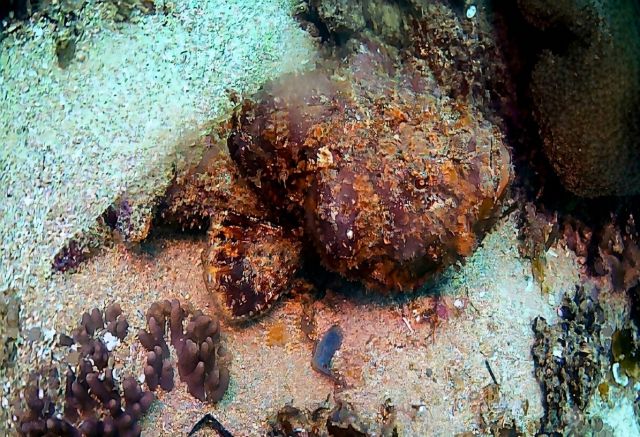
Today, we’re joining him to discover the blue-spotted tree frog, also known as the raganella.
The image shows a specimen of the Blue-spotted Tree Frog (Taeniura lymma), a cartilaginous fish belonging to the Dasyatididae family (order Myliobatiformes).
Here is a detailed description based on the principles of marine biology:
Taxonomy and Morphology: The body is dorsoventrally flattened, with a nearly circular or oval pectoral disc of a yellowish-brown colour, covered with characteristic, vivid spots of a bright electric blue.
Anatomy and Sensory Structures: The spiracles, situated immediately behind the prominent eyes, are clearly visible; these are essential structures that enable the animal to draw in water for respiration even when buried in the sediment. On the ventral surface (not visible here) are the gill openings and mouth.
Tail and Defence: A long, muscular tail extends from the rear of the disc, bearing one or two serrated, venomous spines, used exclusively for defence against predators. Protective skin folds run along the sides of the tail.
Habitat and Ecology: A species typically found in tropical coral reefs in the Indo-Pacific (including the Indian Ocean and Kenyan reefs), it prefers shallow sandy bottoms, lagoons and areas protected by coral, where it spends much of its time resting on the seabed or searching for small crustaceans and benthic molluscs.


MARINE ENVIRONMENT
by Pasquale Ariano

Our website’s Sunday features continue, focusing on the wonders of the seabed off the Kenyan...
MARINE ENVIRONMENT
by Pasquale Ariano

Our website’s Sunday features continue, focusing on the wonders of the seabed off the Kenyan...
MARINE ENVIRONMENT
by Pasquale Ariano
Let’s continue our exploration of the seabed off Diani Beach, a tourist destination on...
MARINE ENVIRONMENT
by Pasquale Ariano

Our website’s Sunday features continue, focusing on the wonders of the seabed off the Kenyan...
MARINE ENVIRONMENT
by Pasquale Ariano

This Sunday, once again, we take a look at the wonders of the seabed off the Kenyan coast...
MARINE ENVIRONMENT
by Pasquale Ariano
Another underwater exploration of the seabed off Diani Beach, a tourist destination...
MARINE ENVIRONMENT
by Pasquale Ariano
Another underwater exploration of the seabed off Diani Beach, a tourist destination on Kenya’s...
MARINE ENVIRONMENT
by Pasquale Ariano
Taking our correspondent’s marine explorations of the Kenyan seabed off the Swahili Coast a step...
MARINE ENVIRONMENT
by Pasquale Ariano
Let’s return to our exploration of the seabed off Diani Beach, a tourist destination on ...
MARINE ENVIRONMENT
by Pasquale Ariano

This Sunday marks the start of our collaboration with a distinguished and passionate Italian living in
MARINE ENVIRONMENT
by Pasquale Ariano

Our website’s Sunday features continue, focusing on the wonders of the seabed off the Kenyan coast...
MARINE ENVIRONMENT
by Pasquale Ariano

Our collaboration continues with a distinguished and passionate Italian living in Kenya, Dr Pasquale...
MARINE ENVIRONMENT
by Pasquale Ariano

MARINE ENVIRONMENT
by Pasquale Ariano

As we do every Sunday, we’re back with our explorations of the underwater wonders of the...
MARINE ENVIRONMENT
by Pasquale Ariano

As we do every Sunday, we return to our explorations of the underwater wonders of the...
NEWS
by redazione

It is a great day for Kenyan marine archaeology.
In Malindi, three experts from Italian seabed arrived at Malindi: Sebastiano Tusa, the Superintendent of the Sea of Sicily, and his two collaborators Claudio Di Franco and Fabio Di Iorio.

