
INSIDE KENYA
30-10-2026 by Freddie del Curatolo
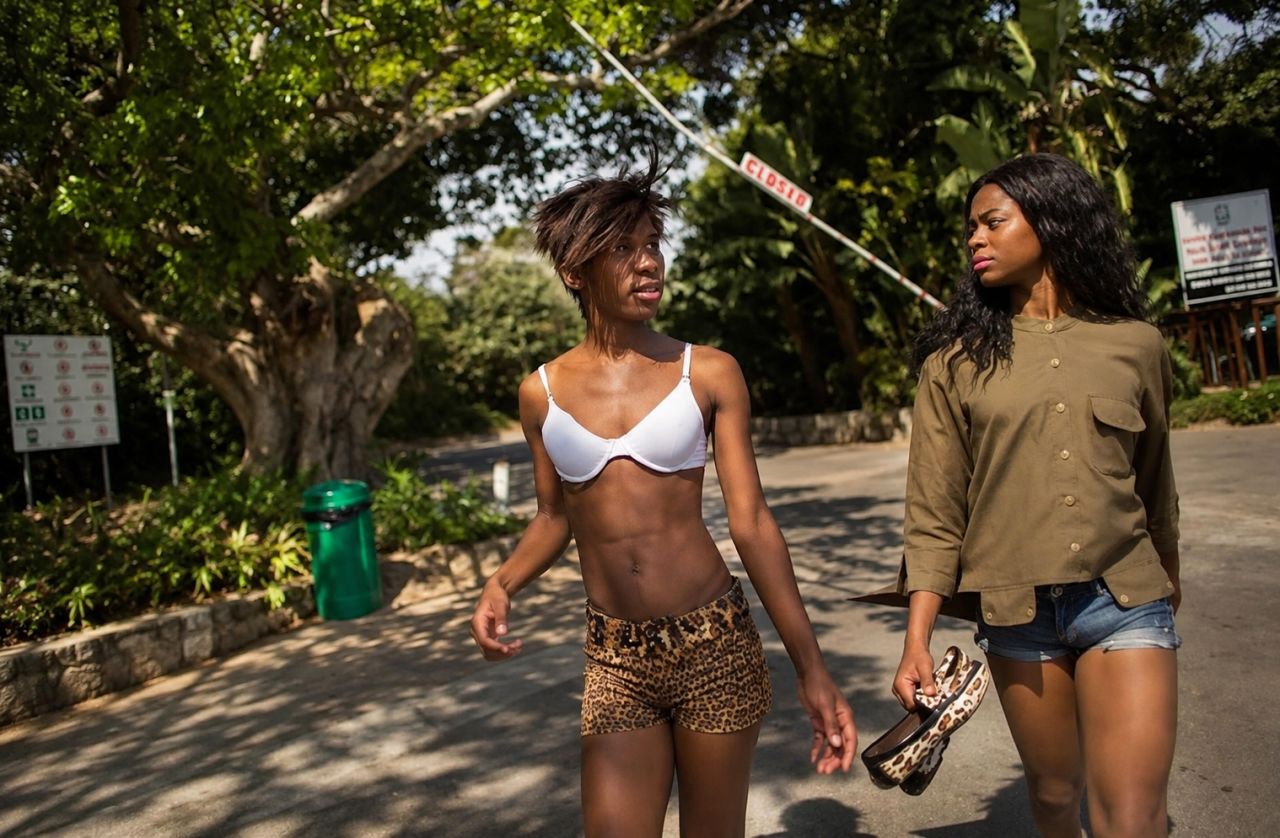
They have always been there in Kenya, but for a long time it was as if they did not exist. Children who grew up with bodies that society could not classify, except by relying on tribal beliefs that blended religion and exorcism; families who learnt to keep the secret; hospitals that intervened even before there was any chance of understanding. Today, intersex people are beginning to speak out, particularly amongst the younger generations. Not because their numbers have suddenly increased, but because the silence is slowly beginning to lose ground.
In the 2019 national census, Kenya recorded 1,524 intersex people out of a population of approximately 47.6 million. A figure which, taken at face value, would suggest an almost negligible presence.
But it is precisely this apparent marginality that is being challenged by human rights organisations. The Kenya National Commission on Human Rights, the national institution for the protection of human rights, cites international estimates suggesting that variations in sexual characteristics may affect a significant proportion of the population. The Kenya Law Reform Commission has also indicated that, by applying certain international estimates to the Kenyan population, the number could reach over one million people.
This is neither an alternative census nor verified data: it is a theoretical estimate, which cannot be presented as the actual number of intersex people in Kenya. But the gap between the figures highlights the problem. There is still no sufficiently comprehensive survey, and stigma may lead many families to fail to declare a child’s condition or to prevent it from being registered.
Furthermore, intersex status is not always recognisable at birth. Some variations concern the external genitalia, others the chromosomes, hormones or internal reproductive organs. In some cases, they only become apparent during puberty or during medical examinations.
It is therefore possible for a person to spend years without knowing they are intersex, or to discover it in a healthcare setting without receiving adequate explanations.
Growing up with a body that others feel the need to explain
The investigation published by the newspaper The Star last week details the difficulties faced by many intersex people throughout their childhood and adulthood.
One of the testimonies comes from Grace Kanyi, a pseudonym used to protect her identity. Born intersex and raised as a girl, she underwent numerous medical procedures from a young age without always understanding the reasons behind them. Even as an adult, she says, access to care has been marred by misunderstandings and insufficient information.
Another account, that of David Washe, highlights the distress caused by the need to constantly explain his body to healthcare staff who are often ill-prepared to deal with variations in sexual characteristics.
These are not merely stories about medicine. They are stories of identity, dignity and trust.
For years, in many cases, the approach has been to intervene on the body to make it conform more closely to social expectations. Some interventions are necessary for medical reasons; others, unless urgent and irreversible, may compromise the person’s future autonomy, especially when carried out during childhood without the informed consent of the person undergoing them.
The issue is not about forgoing medical care, but about distinguishing between what is necessary for health and what is done to conform a body to a social norm. An intersex child has the right to receive care, to be informed in a manner appropriate to their age, and to be protected from unnecessary interventions that could affect their life forever.
The LGBTQ+ movement and the opportunity to tell one’s story
It is in this context that the cultural shift of recent years takes on significance. The LGBTQ+ movement in Kenya, whilst operating in a challenging environment and without having secured full protection against discrimination, has helped to open up spaces for discussion on sexuality, identity, rights and individual freedoms.
For many young people, the greater availability of information, support networks and the opportunity to engage with peers have made the search for answers less of a solitary journey.
The term outing, however, also warrants clarification. In Italian, it is often used to refer to the moment when a person decides to make a aspect of their identity public; however, the more respectful term – when the choice is voluntary – is coming out. ‘Outing’, strictly speaking, is the revelation of another person’s identity without their consent.
For an intersex person, sharing their experience can mean finally breaking free from the secrecy imposed by their family or society. But not everyone wishes to make their condition public, and no one should feel obliged to do so simply to prove they exist.
It should also be made clear that intersexuality and homosexuality are not the same thing. The former concerns biological sexual characteristics; the latter, sexual orientation. An intersex person may be heterosexual, homosexual, bisexual or have another identity or emotional experience. They may also not identify with the LGBTQ+ movement or prefer not to be associated with it.
In Kenya, some intersex activists have in fact called for their demands to be distinguished from those of other members of the LGBTQ+ community, in the belief that their specific medical and legal recognition needs must be addressed independently.
Greater visibility, therefore, does not mean that all intersex people share the same journey. It means that it is beginning to be possible to choose – rather than simply endure – whether and how to tell one’s story.
Recognised on paper, yet still inadequately protected in everyday life
Kenya has taken some important steps. The issue of intersex people entered judicial and institutional debate as early as the 2000s. In 2022, the Children Act recognised specific rights for intersex children, including the right to be treated with dignity and to receive appropriate care. Furthermore, in 2025, the new official birth registration forms included the category ‘intersex’ alongside ‘male’ and ‘female’.
These are significant signs, but they do not amount to comprehensive protection.
The Kenya National Commission on Human Rights continues to highlight obstacles in legal recognition, access to healthcare, education and the protection of physical integrity. The government has stated its intention to improve the training of healthcare staff and draw up specific clinical guidelines, whilst the 2024 draft bill on intersex people aims to strengthen safeguards and regulate aspects such as informed consent and protection from harmful practices.
At present, however, gaps remain in national clinical guidelines and in the practical implementation of safeguards. The difficulties do not end in hospitals: documents that do not match a person’s characteristics, discrimination at school, isolation within the family and fear of judgement can make even access to the most basic services complicated.
The issue is particularly sensitive for young people, who are going through a phase of life in which the need to belong clashes with the fear of being mocked or excluded.
This is not a new issue: what is new is the opportunity to talk about it
Perhaps this is the starting point for understanding the phenomenon in Kenya. There are not necessarily more intersex people than before. Slowly, there are more opportunities to recognise a condition that has always existed, to give it a name and to talk about it without it necessarily becoming a source of family shame.
Greater visibility can bring to light experiences that were previously hidden, particularly amongst young people who have access to information and support networks. But we must not confuse the ability to come out with the guarantee of being accepted: for many, speaking openly remains a risk.
Intersexuality is not a fad, a choice, nor even a condition that needs to be automatically ‘corrected’. It is a biological reality that encompasses different situations and requires appropriate medical care, respect for the individual and legal protection.
In a country where the debate on LGBTQ+ rights remains contentious, the stories of intersex people raise a question that goes beyond affiliations and ideologies: how truly free can a society be if a person has to hide their own body in order to be accepted?
The answer is not measured solely by the number of people who today have the courage to break their silence. It is also measured by the possibility that, tomorrow, an intersex child might grow up without being regarded as a problem to be solved, and that a young adult might speak about themselves without having to choose between their dignity and their place in the community.


NEWS
by redazione
As of today Kenya may like General Vannacci and his fans a little less.
While...
EDITORIAL
by Freddie del Curatolo

In a ruling that many were quick to call historic, a few days ago Kenya's Supreme Court overturned after...

