
RACCONTI
05-10-2017 by Binyavanga Wainaina

Let’s revisit a passage we translated, taken from a humorous, ironic and now out-of-print booklet by the Kenyan journalist and writer Binyavanga Wainaina, which pokes fun at the clichés of Western writers who tackle the subject of Africa.
How to Write About Africa
In the title, always use the words ‘Africa’, ‘black’ and ‘safari’.
In the subtitle, include terms such as ‘Zanzibar’, ‘Masai’, ‘Zulu’, ‘Zambezi’, ‘Congo’, ‘Nile’, ‘great’, ‘sky’, ‘shadow’, ‘drums’, ‘sun’ or ‘ancient splendour’.
Other useful words include ‘guerrilla’, ‘timeless’, ‘primordial’ and ‘tribal’.
Never feature a photo of a well-dressed, healthy African on the cover (or anywhere inside the book), unless that African has won a Nobel Prize.
Instead, use images of bare-chested people with their ribs showing.
If you really must depict an African, make sure they’re wearing traditional Maasai, Zulu or Dogon attire.
In the text, describe Africa as if it were a hot, dusty country with undulating grasslands, animals and small, tiny, malnourished human beings.
Or hot and humid, with a population of short stature who eat monkeys.
Don’t get bogged down in detailed descriptions; Africa is vast: fifty-four nations and nine hundred million people far too busy starving, dying, fighting or emigrating to have time to read your book.
The continent is full of deserts, jungles, highlands, savannahs and many other landscapes, but your readers aren’t interested in that.
Keep your descriptions romantic and evocative, without going overboard on the details.
Remember to mention that Africans have music and rhythm in their blood, and that they eat things no other human being is capable of eating.
Never mention rice, meat or wheat: instead, among the typical dishes of the Dark Continent, opt for monkey brains, goat, snake, worms, larvae and all manner of game.
And do remember to add that you have managed to eat these foods and, indeed, have learnt to enjoy them.
Prohibited topics: scenes of everyday life, love between Africans, references to writers or intellectuals, mentions of schoolchildren who do not suffer from yaws, Ebola or malaria, or who have not undergone genital mutilation.
In the book, adopt a subdued, conspiratorial tone with the reader and a sad tone, along the lines of ‘that was exactly what I expected’.
Make it clear straight away that your progressive views are beyond reproach, and say how much you love Africa and how much you feel at one with that land – indeed, that you cannot live without it. Africa is the only continent one can love: make the most of it!
If you are a man, describe the sweltering virgin forests.
If you’re a woman, talk about Africa as if it were a man in a multi-pocketed jacket disappearing into the sunset.
Africa is to be pitied, adored or dominated.
But whichever perspective you choose, make sure you give the impression that without your intervention, Africa would be doomed.
Your characters can be naked warriors, faithful servants, soothsayers, shamans and wise old men living in splendid hermitages.
Or even corrupt politicians, incompetent and polygamous tour guides, or prostitutes you’ve been with.
The loyal servant must have the demeanour of a seven-year-old child, in need of guidance, who is afraid of snakes and constantly drags you into dark conspiracies. The wise old man will always be descended from a noble tribe; his eyes will be crusty, and he will be close to the heart of Mother Earth.
Today’s African is a fat man who works (and steals) at the visa office and denies work permits to Western experts who truly have the continent’s best interests at heart. He is an enemy of development, hindering the good, competent Africans who would like to set up non-governmental organisations and nature reserves. Or he is an intellectual who studied at Oxford and has become a serial killer of politicians in double-breasted suits: he is a cannibal who fancies branded champagne, and his mother is a wealthy sorceress and healer.
Don’t forget to include in the book the malnourished African woman who wanders half-naked through the refugee camp, waiting for charity from the West: her children have flies on their eyes and round belly buttons, and she has empty, sagging breasts.
She must appear destitute and must have neither a past nor a backstory (any digression would dampen the dramatic tension).
She must complain but must not say a word about herself, except when referring to her suffering.
Also include a maternal and caring female figure, with a loud laugh, who looks after you and your wellbeing, and simply call her Mama.
Her children will all be delinquents.
All these characters should serve as a backdrop to your hero, helping him to appear better.
He is the one who can educate, bathe and feed them. He looks after a great many children and has witnessed death.
Your hero is either you (if it is a reportage), or a generous foreign aristocrat (or celebrity) full of tragic charm, who has now dedicated himself to animal rights (if your book is fiction).
Among the villainous Western characters, there must be the children of conservative government ministers, Afrikaners and World Bank officials.
When you talk about exploitation by foreigners, mention Chinese and Indian traders and, in general, blame the West for the situation on the African continent.
Try not to go into too much detail, though.
Quick, rough sketches are perfectly fine.
Avoid showing Africans laughing, or bringing up their children, and do not portray them in frivolous circumstances.
Have them say something interesting about European or US involvement on the continent.
African characters should be colourful, exotic, larger than life, but hollow inside, with no contradictions, conflicts or choices in their lives, no depth or desires that might confuse matters.
Describe bare breasts, mutilated genitals and oversized genitals in detail.
And corpses.
Or, better still, naked corpses.
And above all, naked corpses in a state of decay.
Remember: any work in which African people appear wretched and repulsive will be seen as the ‘real’ Africa, and that is precisely what you want on the cover of your book. Do not have too many qualms about this: you are trying to help the continent by asking Westerners for help.
The ultimate taboo when writing about Africa is to describe the suffering and death of a white person.
Animals, too, must be portrayed in a complex and nuanced way.
They speak and have names, ambitions and desires.
They are also good parents: ‘See how lions teach their young?’, elephants are selfless, the females are true matriarchs and the males are dignified leaders of the herd. And the same goes for gorillas: never say anything negative about elephants or gorillas.
Always defend them, even when they invade farmland, destroy crops and kill people.
Describe the big cats with great emphasis.
Hyenas, on the other hand, are fair game and must have a vague Middle Eastern accent.
Any small African animal living in the jungle or the desert must always be described as being in a good mood.
After celebrity activists and volunteers, the most important people in Africa are those who fight to protect the environment.
Do not offend them. You need them to invite you to their 10,000-square-metre reserves, as this is the only way you’ll be able to meet and interview the celebrity activists.
Putting a picture of a man or woman fighting for the environment on the cover – looking intrepid and with an inspired gaze – works a treat in bookshops and will sell you loads of copies.
Who qualifies as such? Well, any white person, tanned, dressed in khaki, who has at least once looked after an antelope or owns a ranch is someone who is trying to protect Africa’s rich natural heritage.
When you interview them, don’t ask about money; don’t ask how much they earn from it.
Above all, avoid any reference to the wages they pay their workers.
If you forget to mention the African light, your readers will be astonished.
And the sunsets. An African sunset is a must.
It’s always vast and red, and the sky is boundless.
The vast open spaces and the game to be hunted are the focal points.
Africa is the land of vast open spaces.
When describing the flora and fauna, remember to mention that Africa is overpopulated.
On the other hand, when your protagonist finds themselves in the desert or the jungle amongst the locals, it’s a good idea to remind the reader that Africa has been depopulated by AIDS and war.
You’ll also need a nightclub called the Tropicana where mercenaries, villainous indigenous upstarts, prostitutes, guerrillas and exiles all meet.
In any case, end your book with Nelson Mandela saying something about rainbows and hopes for rebirth.
Because you care deeply about Africa.


ITALIAN PODCAST
by redazione

In this episode of the ‘Italians in Kenya’ podcast, Freddie del Curatolo introduces and reads the Italian translation...
BOOKS OF KENYA
by redazione

Since 2008 we have been collecting, after reading and reviewing them, the books on...

On 21 May 2019 he prematurely left us one of the greatest Kenyan writers and one of the most lucid, passionate...
SHOW
by redazione

The satire and irony of Freddie del Curatolo and the musician and his sidekick Marco "Sbringo" Bigi...
ITALIAN PODCAST
by redazione

This week's “Rotopodcast” on the Spotify and YouTube channels of Italians in Kenya...
EVENTI
by redazione

One last show to close the season and to hand over to the Italian non-profit organisation Karibuni the fruits...
ITALIAN EVENTS
by redazione

The new book by Freddie del Curatolo and Leni Frau entitled ‘Ti immagini l'Africa’ (Can...
MAL D'AFRIQUE
by redazione

This space is dedicated to all the people who had to do with Kenya, on holiday, for job, guests of a friend, for voluntary service or by any other voluntary or unintentional chances, and who experienced so much the magic...
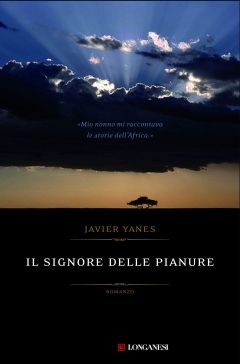
A good read, about past times and those who dream of reviving them, until reaching the origin of those ancient tales narrated here. It's the Kenya of «Lord of the prairie», the latest book by the spanish writer Javier Yanes.
EVENTS
by redazione

On Thursday 21 March at 10 am, at the National Museum in Malindi, the Italian Cultural...


