
EDITORIAL
26-10-2026 by Freddie del Curatolo
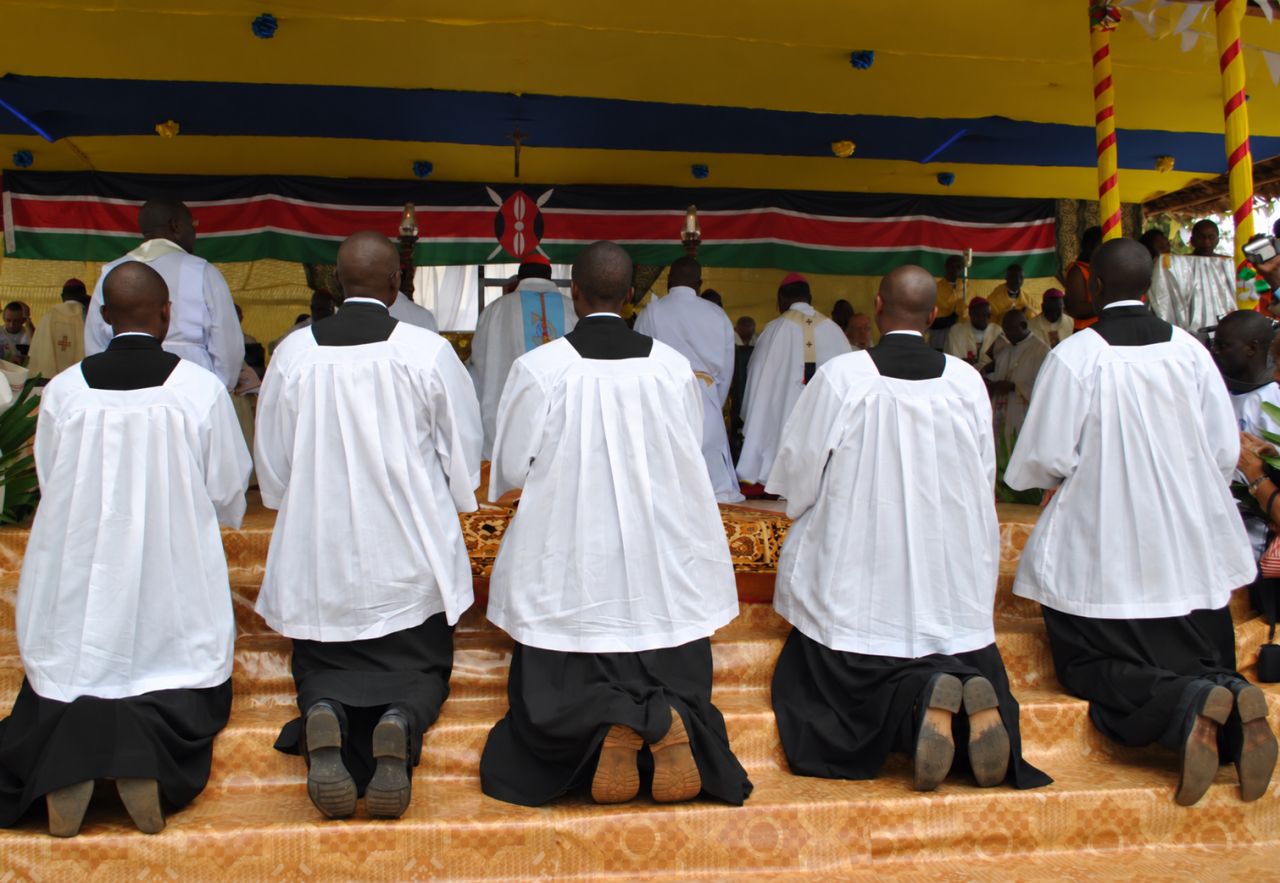
Religion, tribalism and power: on the eve of the 2027 elections, there is a risk that faith will become a tool for dividing citizens, whilst the country’s real issues remain in the background. From Shakahola to pulpits turned into political stages, a reflection on the increasingly delicate line between religious conscience and electoral support.
In Kenya, God does not need to stand for election. His spokespeople are already taking care of that, often armed with a Bible, a microphone and an electoral following. On the eve of every election, faith takes its place once again in the front row of national politics, whilst ethnic differences pave the way and promises of redemption become intertwined with those of development. The problem is not believing in God. It is when someone claims to have a direct line to Him and, possibly, even control over the ballot papers.
For us Italians, who recall the history of our eighty-year-old republic and the role that priests played in ‘guiding’ the faithful to the polls, in the name of a political party that even incorporated a religious connotation into its name, this is nothing new.
But for this young democracy – and not just the Christian one – there has always been a greater need to grapple with ethnic divisions, fuelled by political competition.
The crisis following the 2007 elections left over 1,100 dead and hundreds of thousands displaced, demonstrating just how quickly community loyalties can turn into battlelines of violence. Today, as the country approaches the 2027 elections, the risk is re-emerging that the language of faith may end up reinforcing the very divisions it is meant to help overcome.
To understand the present, we must look back at the political history of independent Kenya.
After 1963, the new state inherited from colonialism a society marked by regional, ethnic and social differences, as well as profound inequalities in access to land and economic opportunities. In the decades that followed, the distribution of public resources and institutional posts fuelled the perception that some communities were closer to power than others.
During Daniel arap Moi’s long rule, the political system remained dominated by a strong centralisation of power. With the return to a multi-party system in 1991, electoral competition resumed, but community affiliations often continued to carry more weight than the policy differences between the parties. Alliances were formed and dissolved around leaders, regions and the balance of power between ethnic groups.
The 2007 electoral crisis revealed the most dramatic consequences of this dynamic. Following the disputed declaration of Mwai Kibaki’s victory over Raila Odinga, protests turned into violence, resulting in the deaths and displacement mentioned above.
It was not a religious war. It was, above all, a political and ethnic crisis, fuelled by allegations of electoral fraud, rivalries amongst the elite and resentments that had built up over the years. But the lesson remains relevant today: when the vote is perceived as a showdown between communities, citizens risk ceasing to be individuals with rights and aspirations and instead becoming representatives of one group pitted against another.
Today, the challenge is to prevent a new divide – built around faith and the presumed moral superiority of those supporting a particular candidate – from being added to this landscape of affiliations.
The church as a place of prayer, but also as a political arena
In Kenya, the relationship between politics and religion has deep roots. Christian churches, mosques and other religious institutions have played a leading role in education, community support, the defence of rights and, at various points in history, calls for democratisation.
It would be wrong to reduce this presence to a form of manipulation. For many people, places of worship provide practical services that the state does not always manage to guarantee: support for families, education, assistance for the poorest, a listening ear and protection.
The problem arises when the relationship turns into a political exchange.
A candidate provides money to build a church, fund a building or purchase equipment. He is welcomed with gratitude, given the microphone, and his name is mentioned from the pulpit. The gesture may be presented as personal generosity, but its repetition during an election campaign raises an inevitable question: where does charity end and where does the investment in political support begin?
It is an issue that also concerns the autonomy of religious institutions. If a community receives financial support from a politician, should its members feel free to judge that politician’s actions without their gratitude towards the benefactor becoming an electoral obligation?
In the Kenyan debate, this concern is not new. In 2021, the National Council of Churches of Kenya urged its member churches not to turn places of worship into platforms for politicians, warning of the risk that messages of hatred and division might find their way in. The issue has returned to the forefront of the debate in the run-up to the 2027 elections.
Religious freedom also encompasses the right of a believer not to be treated as a voter whose support has already been secured.
William Ruto and the political power of faith
In the 2022 elections, William Ruto made his evangelical Christian identity a visible part of his campaign. His frequent attendance at religious events, donations to churches and appeals to faith helped to shape his public image.
This fact alone does not prove that citizens voted for him solely for religious reasons. Voting choices were also influenced by economic conditions, expectations of change, political alliances and disillusionment with the traditional elites.
However, the relationship between personal religiosity and political support deserves attention when a candidate is presented not merely as an administrator to be judged, but as someone who enjoys a particular divine legitimacy.
It is here that democratic debate risks losing its balance.
A president may be a deeply devout believer. A pastor may freely express his political views. A believer may regard his religion as an important criterion for choosing whom to vote for. But none of these factors should exempt a candidate from scrutiny regarding his track record, fulfilled promises, economic policies and the management of public funds.
Faith is not a guarantee of good governance, just as the secular nature of the state does not require citizens to renounce their religious convictions.
Article 8 of the Kenyan Constitution stipulates that there is no state religion. This principle does not exclude God from society: it prevents, at least at the constitutional level, the state from officially identifying with any particular denomination.
This distinction is fundamental. In a pluralist democracy, the president governs on behalf of those who do not share his faith, those who profess a different faith, and those who do not believe at all.
Tribalism does not disappear: it changes its language
Kenyan ethnic politics is not simply a cultural relic destined to disappear with modernisation. It is also the result of a history in which access to resources, representation and opportunities has often been perceived through the prism of community affiliation.
For this reason, the call for national unity cannot be limited to asking citizens to forget their own identities. It must address the material reasons why those identities become politically decisive.
If a community feels excluded from public investment, if young people cannot find work, if access to land or services appears unfair, the appeal to communal identity can become a way of giving voice to real frustrations. Political leaders can capitalise on these frustrations and transform them into a narrative that attributes responsibility for the problems to another group.
Religion can reinforce this mechanism when it offers a moral justification for the conflict: we are on the side of good, they are on the side of evil; we are blessed, they stand in the way of the nation’s destiny.
It is an effective language because it simplifies reality. It does not require a discussion of budgets, unemployment, corruption, healthcare or public debt. It demands that people choose which side to be on.
But a society does not resolve its own inequalities by turning them into the sins of others.
In August 2026, the National Cohesion and Integration Commission and representatives of interfaith organisations had already warned against disinformation, hate speech and the use of religious identity to fuel divisions in the run-up to the 2027 elections. Their appeal also highlighted the role that religious communities can play in conflict prevention.
This is a key point: the very same social media platforms that can be used to spread hostility can also become tools for mediation, dialogue and reconciliation.
A pastor, an imam or another religious leader can call on their followers to exercise civic responsibility, to promote peace, solidarity and respect for their opponents. They can also criticise public policies and denounce injustices. The problem is not that religion enters the public debate: it is that it is used to wrest power from the judgement of citizens.
Similarly, politicians should not be allowed to use ethnic differences to turn democratic competition into a confrontation between hostile communities. And digital platforms should not become places where voices, images and fake news are disseminated to blame an entire group for the actions of individuals.
Electoral peace, in fact, does not begin on the day the polls open. It is built long before that, in everyday language, in the media’s sense of responsibility, in the words of leaders and in the ability of institutions to intervene when hate speech becomes a real threat.
Ultimately, the problem is not when God enters politics. It is when someone claims to speak in his name to prevent others from holding them to account for their actions.


NEWS
by redazione

Here we go again. Even without a shred of negative news, with no deaths or injuries in Kenya's...
SOCIETY
by redazione

Kenya, where wealth does not count and people trust only family members.
From a survey conducted by Twaweza and published by "The Voice of the People" in the Sunday ...
NEWS
by Freddie del Curatolo
Kenya greets its second President of the Republic after the Father of the Fatherland ...
FREDDIE'S CORNER
by Freddie del Curatolo

All waiting for the results, as if announcing one president over the other would change anything.
All...
LATEST NEWS
by redazione

he Supreme Court of Kenya upheld the appeal of the Opposition represented by Nasa Alliance and its candidate President Raila Odinga, annulling the result of the national elections.
This is an unprecedented fact in a Republic of the African Continent.
SOCIETY
by redazione

A report by the Twaweza Society in 2021, a year in which Kenya had to deal with the results of the well-known...
NEWS
by redazione

US Ambassador to Kenya Robert Godec spoke in press on the forthcoming presidential election in Kenya.
"We do not have a preferred candidate - said Godec to the Kenyan press - for us it is important that the new president...
NEWS
by Freddie del Curatolo

Tanzania and Kenya in the last few years have shown clear differences that, if they have not ...
POLITICS
by redazione

The Electoral Commission of Kenya IEBC rejected the statement by the leader of the Opposition leader Raila Odinga announcing that he was renouncing to run for the Kenyan Presidency in the new elections, scheduled for 26 October next.
POLITICS
by redazione

The date of the new elections in Kenya could be postponed.
This is what the IEBC Electoral Commission would have reported yesterday evening to the national daily Daily Nation, after receiving a dossier on the telematic organisation of the forthcoming...
NEWS
by Freddie del Curatolo

Only journalists without professional ethics, no passion for their profession and in complete bad faith can hold, as did the italian newspaper "Repubblica" yesterday, can title "Kenya in chaos".
We've got used to it now and I hope that people who...
POLITICS
by redazione

The new presidential elections in Kenya will take place on Thursday 26 October instead of Tuesday 17 October.
Confirmation is open the day after the Supreme Court of Kenya's publication of the judgment annulling the previous elections.
Elections that have...
POLITICS
by Freddie del Curatolo

Time is running out and not everything is ready for the organization of the next national elections in...
POLITICS
by redazione

The new presidential elections in Kenya are likely to slip by nine days.
The new date proposed by the French telematic agency Ot-Morpho, which is responsible for the organisation of the vote, would be 26 October.
The IEBC Electoral Commission...


