
KENYA NEWS
23-06-2026 by Freddie del Curatolo

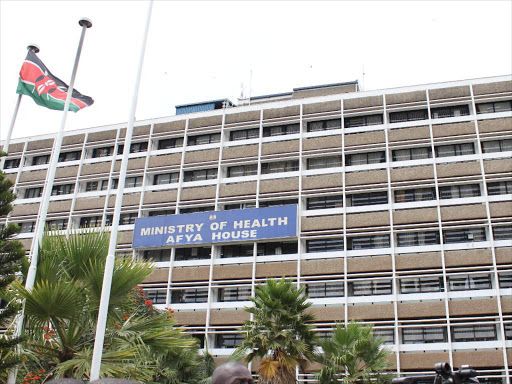
Whilst confirmed cases of Ebola in the Democratic Republic of the Congo have exceeded a thousand, in Kenya the battle is being fought in the courtrooms rather than in hospitals. The High Court has ordered the closure of the controversial quarantine facility backed by the United States, and Health Minister Aden Duale has been forced to apologise to the judges.
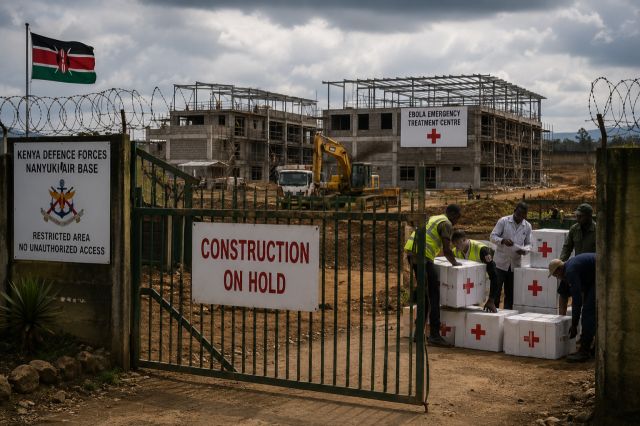
The facility was intended to prepare for an emergency that has not yet occurred. Today, however, the planned Ebola quarantine centre in Laikipia County has become, above all, a political and institutional issue. After weeks of protests, legal challenges and accusations, the Kenyan government has announced the suspension of all activities related to the project.
Thus, the saga of the Ebola quarantine centre due to be built in Nanyuki, in Laikipia County, may have reached a turning point. After being summoned by the High Court and found guilty of contempt of court for continuing the works despite the interim orders, Health Minister Aden Duale announced that all activities relating to the project had been halted.
Appearing before the judges, Duale stated that he had never intended to disregard the judiciary’s decisions and attributed the continuation of activities to a different interpretation of the Court’s orders. According to the minister, the government had taken the view that the injunction concerned the implementation of international cooperation agreements and not the preparatory and technical work related to the facility.
“I would be the last person to defy a court order,” said the minister, expressing regret for any action or omission that may have created the perception of a breach of judicial directives.
The project, funded by the United States with an estimated investment of around 13.5 million dollars, involved the construction of a 50-bed quarantine unit within the Nanyuki military base. The facility was intended to accommodate American citizens who might have been exposed to the Ebola virus whilst on missions in the neighbouring Democratic Republic of the Congo and, according to the Kenyan government, to help strengthen the country’s capacity to respond to health emergencies.
However, it is precisely this last point that has been contested by sections of the public, civic groups and politicians, who have accused the government of authorising a facility intended primarily to serve foreign interests without adequate involvement of local communities. The protests, which have been particularly intense in the Laikipia region, have fuelled suspicions and alarmist theories, with inevitable repercussions for the tourism sector as well.
The epidemiological reality, however, tells a different story. Despite the regional alert and the strict border controls introduced, Kenya has not recorded a single case of Ebola. In recent months, several suspected cases have been tested, but all results have come back negative.
The Ministry of Health continues to maintain a high level of vigilance, particularly at international entry points and along the main trade routes with Central Africa. This caution is justified by the evolution of the epidemic in the Democratic Republic of the Congo, where the number of confirmed cases has exceeded 1,000 for the first time since the start of the emergency.
According to the latest figures released by the Congolese authorities, confirmed cases have reached 1,048, with 267 deaths. These figures confirm that Ebola continues to represent one of the continent’s most serious health emergencies, whilst remaining confined far from Kenya’s borders.
For Kenya, therefore, the events in Nanyuki raise, above all, political and institutional questions. On the one hand, there is the need to prepare for possible future health emergencies; on the other, the delicate balance between international cooperation, administrative transparency and public trust. A lesson which, at least for the moment, seems to have little to do with the virus and much to do with the management of fear.


EDITORIAL
by Freddie del Curatolo
Kenya is safe enough to host a facility designed to assist American citizens potentially exposed to Ebola, but...
KENYA NEWS
by Freddie del Curatolo
After three weeks of waiting and health checks, the first 20 close contacts of people infected with...
KENYA NEWS
by Freddie del Curatolo

Ebola has never been seen in these parts. Not a single case. And yet, on the slopes of Mount Kenya...
LATEST NEWS
by Freddie del Curatolo

For months, Kenya has been looking westwards, towards the Congo and Uganda, just as...
KENYA NEWS
by Freddie del Curatolo

First came the warnings that Ebola was re-emerging in Central Africa. Then came...
KENYA NEWS
by Freddie del Curatolo

A dramatic twist, in the finest tradition of that Africa depicted a century ago by Ernest Hemingway, who...

Whilst protests are taking place in Nanyuki against the planned Ebola isolation centre and Parliament is...
KENYA NEWS
by Freddie del Curatolo
Kenya no longer has any patients undergoing treatment for Ebola or people in quarantine; it has begun...
KENYA NEWS
by Freddie del Curatolo

The number of people placed in quarantine in Kenya has risen to 10 following the confirmation of...
EDITORIAL
by Freddie del Curatolo

Ebola – or rather this strain of the virus, known as Bundibugyo (and not ‘boogie boogie’ as someone...
KENYA NEWS
by Freddie del Curatolo

For once, it seems that activists and human rights organisations have won. No...
KENYA NEWS
by Freddie del Curatolo
The virus knows no borders, but neither does fear, at a time when, as the Poet predicted: ‘those...
KENYA NEWS
by Freddie del Curatolo
For once, the figures seem to offer cause for hope. Five hundred and fifty-one people were tested within...
KENYA NEWS
by Freddie del Curatolo

Fears over the spread of the Bundibugyo strain of the Ebola virus – which kills one in two of those infected...
KENYA NEWS
by Freddie del Curatolo

Seven official cases may seem like a small number in a country with a population of...
by Freddie del Curatolo

Sometimes the fear of a disease spreads faster than the disease itself. In Kenya, where not a single...

