
LATEST NEWS
06-10-2026 by Freddie del Curatolo

For months, Kenya has been looking westwards, towards the Congo and Uganda, just as one might watch a fire from a window, hoping the wind won’t change direction. It has screened passengers at airports, patrolled its borders, trained healthcare workers and set up isolation centres. It even weathered the controversy surrounding the quarantine facility in Laikipia, when Ebola still seemed like someone else’s problem.
Now it is no longer.
Kenya’s first confirmed case of Ebola has died.
Health Minister Aden Duale announced this on television, explaining that the patient – a Kenyan national who had lived and worked for seven years in the Democratic Republic of the Congo – had arrived in Nairobi on Saturday 3 October, travelling via Uganda.
The man had been ill for about a month and had received treatment in several Congolese hospitals before making the journey home. From Kampala, he had taken a Jambojet flight bound for Nairobi. Upon arrival at Jomo Kenyatta International Airport, he underwent the standard health checks and was then taken directly to Nairobi Hospital, where he was placed in isolation.
His symptoms – fever, severe fatigue, weakness, muscle pain, difficulty and pain when swallowing, and bleeding under the skin – had led doctors to suspect a viral haemorrhagic fever. Samples analysed by the National Virology Reference Laboratory and KEMRI confirmed infection with the Bundibugyo Ebola virus.
Despite receiving supportive treatment, the patient died on Monday evening at 11.30 pm. The funeral is scheduled for today in accordance with the safety protocols in place for Ebola victims.
The focus is now on contact tracing
However, the most delicate part of the situation begins now.
The Ministry of Health has already identified 28 people who came into contact with the patient, including family members and healthcare workers who treated him. But the authorities are also searching for other people who may have been exposed: 23 passengers and four crew members on the Jambojet flight on which the man travelled from Kampala to Nairobi. Quarantine measures have been put in place for those considered to be at risk.
A country that had prepared itself
The confirmation comes after months in which Kenya had built up a comprehensive network of preparedness against the importation of the virus.
In June, the Ministry of Health had reported that over 71,000 travellers had already been screened and that more than a thousand healthcare workers had been specifically trained to respond to Ebola. Twenty-two previous alerts had been investigated and had proved negative.
In September, the WHO had also reported that surveillance measures had been stepped up along the main borders with Uganda, particularly at Busia, Malaba and Lwakhakha.
Those preparations are now being put to the test.
This does not mean that Kenya is automatically facing an outbreak. It means that, for the first time, the country must manage a confirmed case, a death and a chain of contacts that must be traced rapidly.
The virus from the Congo
The Kenyan case is linked to the Bundibugyo Ebola outbreak that has been affecting the Democratic Republic of the Congo for months.
According to the latest figures reported by Reuters, the Congo has recorded over 8,000 cases and more than 4,000 deaths, in what is described as the largest Ebola outbreak the country has ever faced. Uganda was also affected, with 20 cases and two deaths, but in August the WHO declared that transmission of the virus in the country had ended.
Kenya, therefore, is not the scene of a new outbreak originating within its own borders.
It is the first country in the region, after the Congo and Uganda, into which the virus has been officially imported during this new emergency.
No need to panic, but nor should we be complacent
Ebola is not transmitted through the air like the flu. Infection occurs mainly through direct contact with the bodily fluids of an infected person, whether alive or deceased. But this is precisely why contact tracing, prompt isolation and adherence to health protocols are essential.
For Kenya, therefore, it is not yet time for widespread alarm.
And Kenya knows that, in epidemics as in life, preparing for the storm is important.
But it is only when it starts to rain that you really find out whether the roof will hold.


KENYA NEWS
by Freddie del Curatolo
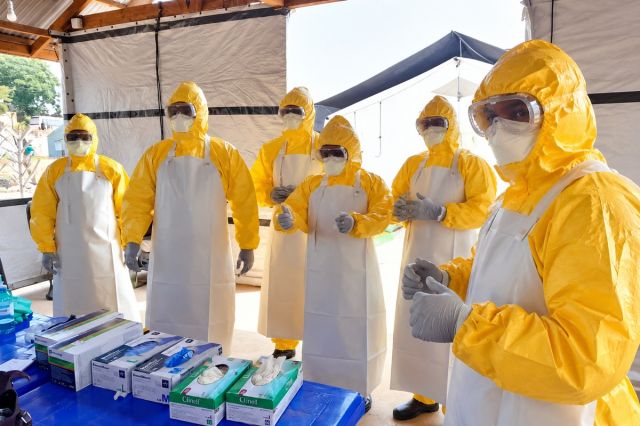
After three weeks of waiting and health checks, the first 20 close contacts of people infected with...
KENYA NEWS
by Freddie del Curatolo

Ebola has never been seen in these parts. Not a single case. And yet, on the slopes of Mount Kenya...
KENYA NEWS
by Freddie del Curatolo

For once, it seems that activists and human rights organisations have won. No...
KENYA NEWS
by Freddie del Curatolo

Whilst confirmed cases of Ebola in the Democratic Republic of the Congo have exceeded a...
EDITORIAL
by Freddie del Curatolo
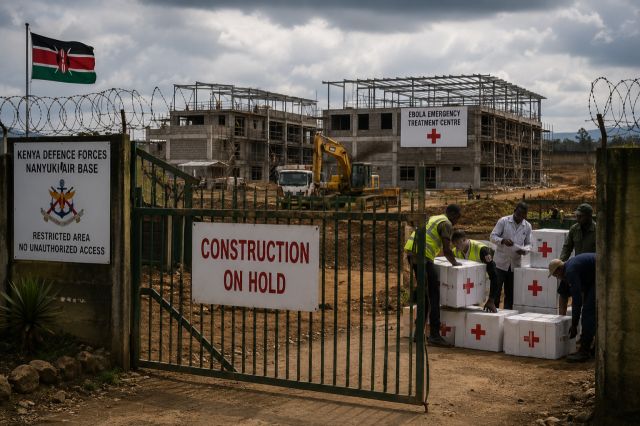
Kenya is safe enough to host a facility designed to assist American citizens potentially exposed to Ebola, but...
KENYA NEWS
by Freddie del Curatolo
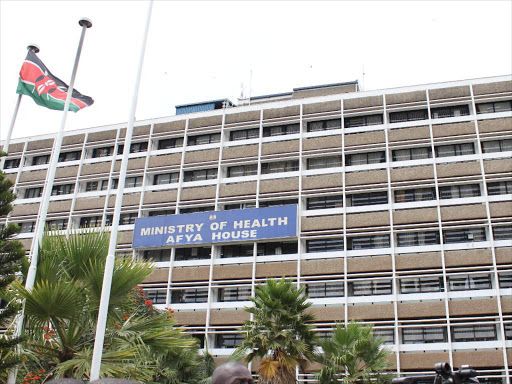
For once, the figures seem to offer cause for hope. Five hundred and fifty-one people were tested within...

Whilst protests are taking place in Nanyuki against the planned Ebola isolation centre and Parliament is...
EDITORIAL
by Freddie del Curatolo

An Italian volunteer, not a tourist, flying from Nigeria to Istanbul (Kano) airport malaria, vomits and is treated as a case of suspected Ebola. Santa precaution, it seems, there can be great, because in Nigeria (168 million inhabitants, according to...
KENYA NEWS
by Freddie del Curatolo

First came the warnings that Ebola was re-emerging in Central Africa. Then came...
KENYA NEWS
by Freddie del Curatolo

Fears over the spread of the Bundibugyo strain of the Ebola virus – which kills one in two of those infected...
by Freddie del Curatolo

Sometimes the fear of a disease spreads faster than the disease itself. In Kenya, where not a single...
EDITORIAL
by Freddie del Curatolo

Ebola – or rather this strain of the virus, known as Bundibugyo (and not ‘boogie boogie’ as someone...
KENYA NEWS
by Freddie del Curatolo
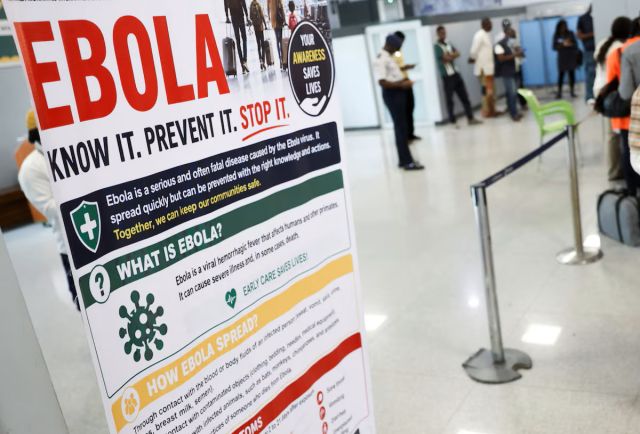
Kenya has recorded its second fatality from the Ebola outbreak. A 65-year-old woman, who had tested...
KENYA NEWS
by Freddie del Curatolo

All it took was one suspected case for Kenya to be added to the list of countries at high risk...
KENYA NEWS
by Freddie del Curatolo
Kenya no longer has any patients undergoing treatment for Ebola or people in quarantine; it has begun...

