
KENYA NEWS
11-02-2026 by Freddie del Curatolo

Once upon a time, there were dreams. Once upon a time, there were plane tickets, photos in front of airports, promises sent on WhatsApp in Swahili, with smiley faces and “bro, everything's fine here.”
And then, suddenly, there was the front line.
There were drones. There were fields full of bodies. There was the mud of Ukraine instead of the red dust of Kenya. And there was a contract written in Cyrillic, signed without understanding a word, under the oldest threat in the world: sign or die.
So, according to official estimates, at least two hundred Kenyan boys ended up fighting for Russia. Maybe more. No one really knows. Because none of them went through official channels. None of them had the right stamp. They just had the right hunger.
The hunger of those who earn a hundred euros a month.
The hunger of those who send money home.
The hunger of those who dream of Dubai, Moscow, Abu Dhabi, and instead find Kharkiv.
Some had left for the Emirates and found themselves in a bad situation. Some were in Moscow for a marathon. Some were trying to become salespeople, security guards, athletes. Some just wanted to escape from a room shared with five others.
They all wanted a better life.
They all found a war.
Victor, Mark, Erik, Moses. Fake names, true stories. Told to Agence France-Presse as one tells a nightmare: in pieces, with sudden pauses, with eyes looking elsewhere.
Victor shows the scars on his arm. He says a Ukrainian drone hit him. He says he saved himself by hiding under a corpse. He says that out of 27, only two came out alive.
Two.
The others stayed there.
In the camp.
In the rivers.
In the statistics.
Meanwhile, in Nairobi, mothers waited for remittances.
Instead, they received broken phone calls.
Or silence.
Grace Gathoni waited for her husband, a driver. She received a death notification.
Charles Mutoka was waiting for his son. He received a grave in Rostov.
Sometimes not even that.
For months, families knocked on closed doors. At the embassy. At offices. At ministries. At newspapers. They cried in the streets. They showed faded photos. They asked for only one thing: explanations.
Finally, something happened.
Foreign Minister Musalia Mudavadi announced a trip to Moscow. “It's unacceptable,” he said. “This practice must be stopped.”
Secretary General for Foreign Affairs Korir Sing'Oei was even more direct: “We are not cannon fodder.”
A simple sentence. Brutal. True.
Kenya has promised to close the suspicious agencies, more than 600, it says. To sign agreements that exclude all forms of military recruitment. To protect its young people.
Meanwhile, however, for years, agencies such as Global Face Human Resources promised European salaries and distributed tickets to hell. “Exciting opportunities,” they wrote online. And they were right: they were exciting. For those who sent them.
They told the young people: salesperson, security guard, athlete.
In Moscow, they said: soldier.
Those who rebelled had to pay. Half a million shillings. An impossible sum. So they signed. And they left.
In the training camps, they met Nigerians, Cameroonians, Egyptians. Africa in camouflage. A continent in the trenches.
According to the Ukrainian ambassador, Moscow first fished in the former Soviet republics, then in Asia, then in Africa. Where there is poverty, there is recruitment. Where there is despair, there is the army.
A globalization of death.
In Kenya, meanwhile, unemployment is rising. The state encourages emigration. Remittances keep entire families afloat. The myth of foreign countries remains intact.
Leave poor. Come back rich.
Or don't come back.
The few who have returned are traumatized. They are frightened by a bird. By a noise. By a motorbike. They receive psychological assistance, says the government. They try to unlearn war.
But how do you unlearn a mass grave?
On the BBC, Mudavadi spoke of historical relations with Russia. Cordial. Positive. “An unfortunate episode,” he called it.
Unfortunate.
For those who died.
For those who lost their legs.
For those who are still waiting.
Russia, officially, remains silent. It does not respond. It does not explain. Relatives who go to the embassy are turned away. Bureaucracy is more resistant than bullets.
So, in Nairobi, all that remains are the photos on the walls.
The signs.
The tears.
And a question as simple as a wound:
Why do our children have to die in other people's wars?
Perhaps because they are poor.
Perhaps because they are invisible.
Perhaps because, in the big global market, even life is a commodity.
And African life costs less.


NEWS
by Leni Frau

Putin's Russia's war on Ukraine could create many more problems for Kenya than we...

We announced the possibility a few days ago, today it's official: Kenya is grappling with a serious fuel...
NEWS
by Freddie del Curatolo

Hunger is gripping Kenyans on the eve of the general elections, and after Nairobi and Mombasa, stocks...
NEWS
by Freddie del Curatolo

The armed conflict between Russia and Ukraine is also likely to have negative repercussions on...
HAPPY NEW YEAR
by Freddie del Curatolo

We want to say it for the last time, somewhat as an exorcism and to throw it back at us, like...
KENYA NEWS
by Freddie del Curatolo

Officially, the number of Kenyans enlisted by the Russian military to fight in the war against Ukraine...

There are Africans who set off in search of work and end up struggling just to...
ENVIRONMENT
by Leni Frau

Every time there is a crisis, whether it be climatic, economic or political, Kenyans are always found to be doing...
SOLIDARITY
by Freddie del Curatolo

Children's centers, schools, health and agricultural projects, support for families and students, and food...
by Freddie del Curatolo

There are dozens of Kenyan athletes around the world. Not all of them are famous...
KENYA NEWS
by redazione

The annual report on peace and security in nations, the Global Peace Index 2025, was published...

Fuel rationing in Kenya is causing shortages particularly of diesel and kerosene at gas stations across...
POLITICS
by Freddie del Curatolo

Russia is aiming for Africa to become the second largest trading centre after the Chinese giant.
This is...
ECONOMICS
by redazione

The exponential increase in inflation since the beginning of the year in Kenya has led to an...
EDITORIALE
by Freddie del Curatolo

Kenya is the country of hospitality, and the definition is not just metaphorical and 'tourist postcard'. If its...
NEWS
by redazione
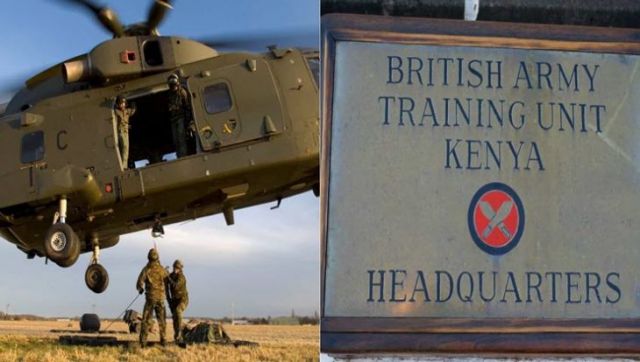
The United Kingdom's military base in Kenya in the town of Nanyuki, which in addition to...

