
KENYA NEWS
06-03-2026 by Freddie del Curatolo

There is a thin thread linking the green hills of Kenyan tea to the busy streets of Tehran. It does not pass through ideologies or military alliances, but through something much simpler: a cup of hot tea. And a few billion shillings.
In recent years, trade between Kenya and Iran has grown steadily, almost silently, away from the spotlight of geopolitics. According to data from the Kenya National Bureau of Statistics, in 2024 Nairobi exported goods worth approximately 6.82 billion shillings to Iran, while imports stood at 2.45 billion, leaving Kenya with a trade surplus of around 4.4 billion.
All in all, this is a modest trade relationship compared to the giants of global trade, but it is far from irrelevant for some key sectors of the Kenyan economy.
At the heart of this trade is a green leaf.
Tea is by far Kenya's main export to Iran, accounting for about 90 percent of the total. In 2024 alone, Kenya shipped around 13 million kilograms of tea to the Iranian market, worth over 4.2 billion shillings.
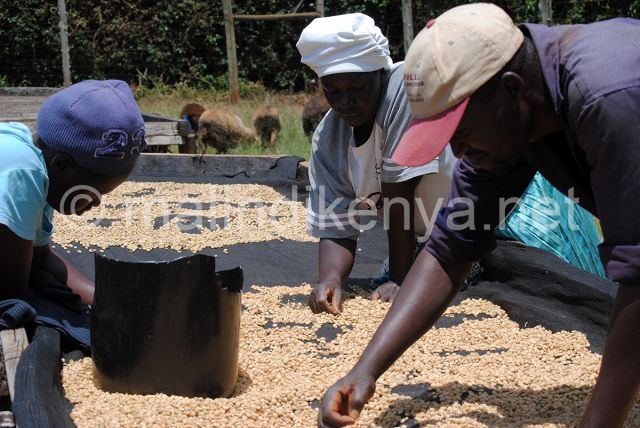
Alongside tea, there are also smaller quantities of coffee and sheep and goat meat, products that Nairobi has been trying to promote in the Middle East in recent years in order to diversify its agricultural markets.
On the other hand, Iran mainly exports energy and industrial products to Kenya: fuels, fertilizers, chemicals, and some manufactured goods.
It is a simple, almost primitive trade relationship: Kenya sends agricultural products, Iran sends energy and industrial products.
The problem is that this economic relationship passes entirely through an area of the world where the winds are blowing strongly today.
The military crisis that has erupted in the Middle East—with attacks, naval tensions, and closed airspace—risks directly affecting the trade routes connecting East Africa to the Persian Gulf. Shipping companies are already increasing insurance costs, and some routes are being diverted to avoid passing through the Strait of Hormuz, one of the most sensitive maritime corridors on the planet.
For Kenyan tea, this means one very simple thing: shipping costs more and takes longer.
And when it comes to agricultural products destined for international markets, time is money. Sometimes a lot of money.
If tensions continue, Kenyan exporters risk losing competitiveness compared to other major global tea producers such as India and Sri Lanka, which can more easily reach markets in the Middle East and Asia.
The risk is not so much the immediate loss of the Iranian market as something more insidious: its slow erosion.
Buyers change suppliers, routes change, and by the time the geopolitical storm has passed, trade has often already taken other paths.
For Kenya, which exports tea to nearly 100 countries but continues to depend heavily on a few large markets, even a “secondary” customer like Iran can make a difference in the balance sheet of an entire agricultural season.
So while missiles and diplomatic statements fill the international news, on the plantations of Kericho and Nandi, the concern is much more concrete.
It is not about politics.
It is simply the question that every exporter is asking themselves these days: if the Gulf closes, where will all that tea end up?


ECONOMICS
by Freddie del Curatolo

Kenya is one of the countries in Africa least taxed by the US government, and also...

Another step towards the abolition of tax barriers and the implementation of bilateral agreements...
EDITORIAL
by Freddie del Curatolo

The rise in tension in the Middle East and the attacks between Israel and Iran, in addition to threatening...
KENYA NEWS
by Freddie del Curatolo

The Iranian government has assured that Kenya is safe and is not one of the targets of...
NEWS
by redazione

Excellent news for the economy and for tourism in Kenya.
After years of waiting, the Jomo Kenyatta International Airport in Nairobi has obtained the certification of Category A to be able to make and receive direct flights from the United...
COMMERCE
by redazione

Italy, like other European markets, may also be affected by the lawsuit over the export of ...
EDITORIAL
by Freddie del Curatolo

Today, wars need drones more than rifles, and ports more than...
NEWS
by redazione

Are already two international companies who raise crocodiles taken along the Galana River, inland from Malindi, then kill them and sell the skin and in the second instance, the meat.
In the Country of the Protection of the savannah animals,...
by Leni Frau

Kenya is for most of its extension a fertile and rich land, where it grows more or less of everything.
Compared to...
COMMERCE
by Freddie del Curatolo

Ever closer ties, mutual facilitation of trade, and the development of digital technologies and services to...
KENYA NEWS
by Freddie del Curatolo

Kenya is strengthening its role as a leader in Africa’s digital economy. On 28 August, Nairobi will...
ECONOMICS
by Freddie del Curatolo
From now on, it will be possible from Kenya to export products to 27 European Union countries duty-free, to...
SOCIETY
by Freddie del Curatolo

During the last election campaign, folkloric candidate George Wajackoyah, while admitting that he has never...

The saying "desperate times call for desperate measures" in Kenya often represents the only practical...


