
EDITORIAL
24-10-2026 by Freddie del Curatolo
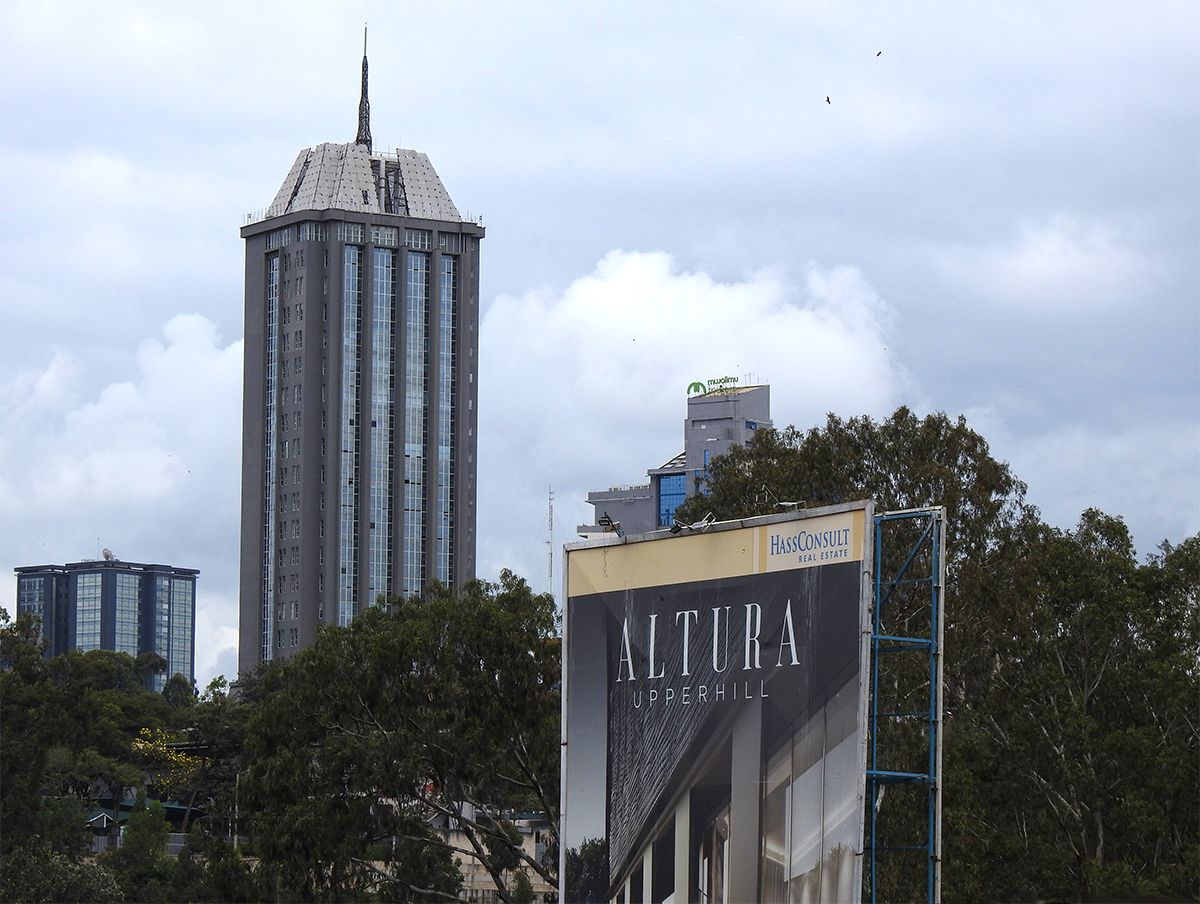
By 2050, Nairobi could be home to 12 million people and play an even more central role in East Africa’s economy. Forecasts point to industrial growth, new jobs and investment. But behind the figures lies a question that no skyscraper can hide: will a city that doubles in size also manage to double its services, opportunities and quality of life?
Because a city does not become modern when it learns to build higher, but when it enables those living at ground level to live better. Nairobi seems to have chosen vertical growth as the measure of its success: skyscrapers, motorways, exclusive neighbourhoods, new temples of money. Meanwhile, for many of its inhabitants, progress continues to be measured in hours spent in traffic, the cost of rent, access to water and the distance between home and work.
The Silicon Savannah and the promise of wealth
The Kenyan capital has good reasons to look to the future with ambition. For years it has been one of East Africa’s main economic hubs, a gateway to regional markets and a centre where finance, services, technology and innovation converge. The nickname ‘Silicon Savannah’ is not merely a marketing ploy: Nairobi has developed an ecosystem of digital enterprises, start-ups and financial services that attracts investment and talent.
According to Oxford Economics’ Global Cities 2026 index, over the next 25 years the city could see average annual growth of 5.5 per cent in the IT sector and 4.1 per cent in the financial sector. Industrial output could exceed $38 billion by 2050, creating around 700,000 new industrial jobs.
These are projections, not guaranteed promises. But they paint an important picture: Nairobi does not want to be merely a hub for the offices of multinationals and the regional headquarters of large companies. It also aims to become a centre of production, capable of generating employment and wealth.
The difference is substantial. A capital city that relies predominantly on services can generate great opportunities, but risks leaving behind those who lack the skills, qualifications or connections needed to access the most lucrative sectors. Industrial growth accompanied by investment in training and employment could, on the other hand, broaden the pool of beneficiaries.
The real question, therefore, is not whether Nairobi should grow. It is how to do so and, above all, for whom.
The city that cannot stop
You only need to travel through Nairobi during rush hour to realise just how much urban growth has already changed daily life. Cars pile up on the main roads, matatus jostle for space between lanes, and motorcyclists squeeze into every available gap. A relatively short distance can turn into an interminable journey.
Traffic is often portrayed as a matter of patience or road discipline. In reality, it is also an economic and social problem. Time spent in queues is time taken away from work, family and rest. The fuel consumed increases transport costs, whilst delays and congestion take their toll on businesses and productivity.
There is also an even more glaring contradiction. According to an analysis published in October 2026 by Africa Uncensored, around 2.27 million daily journeys in Nairobi are made on foot. Yet, in many areas, pavements are incomplete or non-existent, there are insufficient pedestrian crossings, and roads prioritise vehicle traffic over pedestrian safety.
The city, which aspires to compete with major international metropolises, thus struggles to guarantee a basic necessity: being able to walk to one’s workplace, a shop or a bus stop without risking one’s life.
Simply widening the roads is not enough. What is needed is efficient and integrated public transport, suburban rail links, safe pedestrian routes and planning that reduces the need to cross the entire city every day. Otherwise, every new road risks offering only temporary relief, whilst the growing number of vehicles will simply bring the same problem back.
Skyscrapers above, fragility below
Nairobi’s urban landscape is changing rapidly. Westlands, Upper Hill and other areas of the capital have become symbols of a city developing vertically, with increasingly ambitious residential buildings, offices, hotels and shopping centres.
This transformation is a sign of genuine demand and investor confidence in Kenya’s economic prospects. But the property market tells only part of the story.
For a significant proportion of the population, the problem remains finding decent housing at a cost compatible with their income, preferably not too far from work. When rents take up an excessive proportion of earnings, property growth can place further pressure on households, rather than improving their circumstances.
The World Bank has long highlighted this contradiction: Nairobi’s expansion is accompanied by deep inequalities in access to housing, transport and essential services. Informal settlements, often located in flood-prone areas or near polluted watercourses, illustrate just how difficult it is to transform urban expansion into balanced development.
The contrast between a new residential complex and a neighbourhood lacking a sewerage system is not merely aesthetic. It is the physical embodiment of two different speeds within the same city.
A metropolis can construct buildings dozens of storeys high and still fail to provide everyone with running water, adequate sanitation and reliable transport links. The number of building sites alone does not measure collective well-being.
The environmental cost of growth
When a city expands, the land taken up by buildings and roads leaves less space for vegetation and surfaces capable of absorbing rainwater. If the drainage network is not upgraded, heavy rainfall can cause flooding that becomes increasingly difficult to manage.
A World Bank study focusing on Kenya’s urban sector highlighted precisely this link between the expansion of impervious surfaces, the reduction in green spaces and greater vulnerability to flooding. Unplanned urbanisation also exacerbates the challenges of managing waste, wastewater and water supply.
These are problems that do not affect only the poorest neighbourhoods. An inadequate water supply system, a substandard sewerage network or a flooded road can disrupt economic activity across entire areas of the capital.
Climate change, too, makes planning that looks beyond the immediate future all the more urgent. Building today without taking into account extreme rainfall, future water availability and the need to maintain green corridors means creating vulnerabilities that will require more costly interventions tomorrow.
Sustainability, in this sense, is not a luxury reserved for wealthy cities. It is a prerequisite for continued growth without compromising the functioning of the city itself.
The risk of a two-speed metropolis
The crucial issue remains the distribution of opportunities.
Nairobi attracts young people from other regions of Kenya – job-seekers, entrepreneurs and professionals. For many, it represents a real opportunity for self-empowerment: a place to study, start a business and build a future different from that offered by rural areas.
This ability to attract people is one of the capital’s strengths. But the more people arrive, the greater the need to create jobs, housing, schools, healthcare facilities and transport.
If services do not grow at the same rate as the population, the result risks being a metropolis in which prosperity and precariousness, innovation and informality, well-equipped neighbourhoods and areas lacking essential services coexist.
This is not an inevitable fate. It is the result of urban planning, economic and administrative choices. Population growth can fuel a larger domestic market, support new businesses and enable investments that a smaller city would be unable to attract. But for this potential to translate into well-being, infrastructure and public services must be regarded as an integral part of development, not merely an expense to be dealt with when emergencies arise.
The challenge is to move from a city that is chasing its own expansion to one that is able to manage it.
Modernity is not measured in plans
Nairobi faces an extraordinary opportunity. Growth in technology, finance and industry could consolidate its role as a regional economic capital and generate new job opportunities. It would be wrong to view this transformation solely through the lens of nostalgia for a smaller, less congested and less ambitious city.
But it would be equally wrong to confuse growth with progress.
A metropolis is not sustainable simply because it has skyscrapers, motorways and shopping centres. It becomes sustainable when people can get to work without wasting hours every day, find a home without being impoverished, drink safe water, breathe clean air and live in neighbourhoods equipped with services.
By 2050, Nairobi could have a population of 12 million and an economy far larger than it is today. The success of this transformation will not be measured solely in the billions of dollars generated or the jobs created, but also in the ability to make the city liveable for those who build it, pass through it and keep it running every day.


ART & CULTURE
by redazione
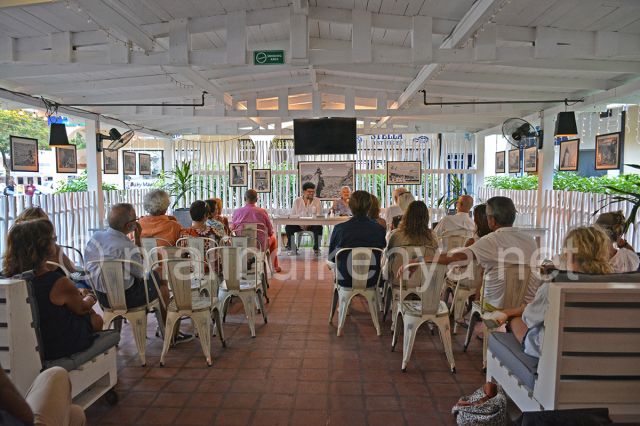
The exhibition "Nairobi, the visible city" by photographer Leni Frau, stage name of Maddalena Stefanelli, soul...
EVENTS
by redazione
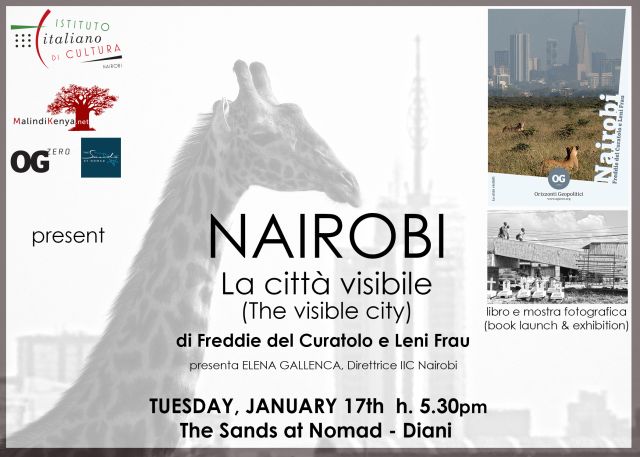
For next Tuesday, Jan. 17, at "The Sands at Nomad" in Diani, the Italian Cultural Institute in Nairobi has...
TALKING KENYA
by redazione

Against the backdrop of a packed Book Fair that, despite the torrential rain that had descended on...
NEWS
by redazione

Kenya will be one of the few countries in the world from which the annular solar eclipse will...
KENYA NEWS
by redazione

For the fifth consecutive year, Nairobi has been named the best African destination for business travel at...

A few weeks ago the city expressway in Nairobi, the now-famous "Expressway," was officially opened. We...
BOOKS
by redazione

We did not expect that a book in Italian about Nairobi in the third millennium would be so well received 'by...
METEO
by redazione

While the sun finally seems to be back on the Kenyan coast, to stay there and greet the...
ENVIRONMENT
by Freddie del Curatolo

Nonprofits, environmentalists, and lovers of wildlife and common sense are up in arms in the Kenyan...
SAVANNAH
by Leni Frau

After five years of severe drought, which nonetheless compromised the coastal hinterland and its...
MADE IN ITALY
by redazione

A “turnkey” Made in Italy business is for sale in Nairobi—already up and running and profitable...
EAT AND DRINK
by redazione

The portal of Italians in Kenya has decided to showcase the best of Nairobi's restaurant excellences, which...
WILDLIFE
by redazione

Good news for wildlife in Kenya, and particularly in its capital city, at a time when between climatic woes...


