
EPIDEMIC
21-05-2026 by Freddie del Curatolo

Every time Ebola virus breaks out in Central Africa, someone on the other side of the world cancels a trip to Kenya, convinced that Nairobi is just around the corner from a forest full of infected monkeys. It’s the old geographical misconception of viewing Africa as a single, vast country. But between the outbreaks reported in eastern Congo and western Uganda and the beaches of Malindi lie thousands of kilometers, borders, health checks, and a surveillance system that Kenya has already put back into action.
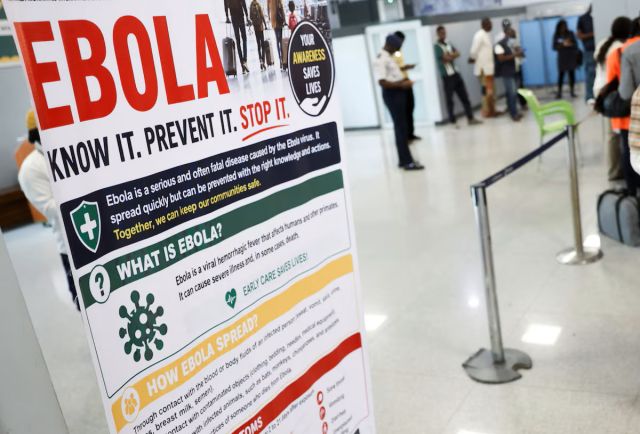
Thus, the government is first and foremost trying to reassure citizens, as well as residents and travelers, following the international alarm over the new Ebola outbreak affecting certain areas of the Democratic Republic of the Congo and Uganda. And in fact, at least for now, Nairobi can afford to do so: no cases have been reported in the country, while the Ministry of Health has already implemented enhanced screenings at airports, land border crossings, and ports.
The problem, if anything, is the usual African paradox: vast distances matter little in the collective imagination. If there is Ebola in Congo, for many European tourists “there is Ebola in Africa.” As if an outbreak in Romania were to automatically empty the beaches of Portugal.
The reality tells a different story. The most serious outbreaks are concentrated in the east of the Democratic Republic of the Congo, in the provinces of Ituri and South Kivu—unstable areas that are difficult to control, marked by armed conflict, constant population movements, and borders that, rather than geopolitical lines, often resemble trails through the bush. The virus has already caused dozens of deaths and hundreds of suspected cases, while the World Health Organization has declared an international public health emergency. The Africa CDC has classified the outbreak as a “high-risk” event, primarily due to transmission that has already occurred across borders and the lack of approved vaccines against the rare Bundibugyo strain.
What worries epidemiologists is not so much Kenya as the very nature of those East African borders where truck drivers, traders, refugees, and travelers cross vast territories daily. Uganda and Congo have intense trade relations, and regional mobility is considered one of the main risk factors for potential cross-border spread.
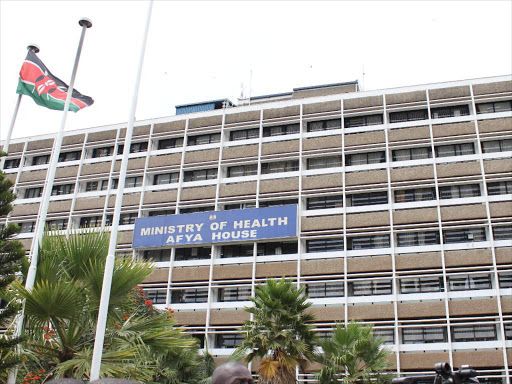
That is why Nairobi did not wait. The Kenyan government, through the Kenya National Public Health Institute, has activated a national emergency system featuring a centrally operated Incident Management System, rapid response teams active 24 hours a day, and health emergency centers on alert in the counties considered most vulnerable.
According to the Ministry of Health, over 34,000 people—including international travelers, drivers, local passengers, and transportation workers—have already undergone health screenings. Controls have been intensified at international airports, ports, and land border crossings, while digital passenger surveillance systems and monitoring of movements in border areas deemed at risk have also been strengthened.
International airports, including Jomo Kenyatta International Airport in Nairobi, have stepped up health surveillance, while KEMRI laboratories in Nairobi and Kisumu, along with the National Public Health Laboratory and mobile testing platforms, have been prepared for potential rapid testing. Airlines, private hospitals, and the Kenyan Red Cross have also been involved in prevention protocols, with checks on the availability of ambulances in the most exposed counties and systems dedicated to the transport of biological samples.
This does not mean that the risk is non-existent. In East Africa, the permeability of borders is a historical reality, and no one can completely rule out imported cases. But it also means that Kenya is now much better prepared than it was during the major epidemics of the past. The Covid years have left behind control infrastructures, digital tracking systems, and an emergency healthcare system that can be rapidly reactivated.
For those traveling to Kenya’s coast—to Malindi, Mombasa, or the southern safaris—the situation currently does not entail any particular restrictions. The advice remains the simplest and most reasonable: stay informed through official sources, avoid alarmist posts on social media, and follow the standard hygiene precautions recommended by health authorities.
This is also because Kenya, which has always been a crossroads of East Africa, knows full well that a virus can cross a border much more easily than a frightened European tourist. And precisely for this reason, this time, it has decided to act before panic sets in.


LATEST NEWS
by Freddie del Curatolo

For months, Kenya has been looking westwards, towards the Congo and Uganda, just as...
KENYA NEWS
by Freddie del Curatolo

All it took was one suspected case for Kenya to be added to the list of countries at high risk...
KENYA NEWS
by Freddie del Curatolo

Fears over the spread of the Bundibugyo strain of the Ebola virus – which kills one in two of those infected...
KENYA NEWS
by Freddie del Curatolo

Ebola has never been seen in these parts. Not a single case. And yet, on the slopes of Mount Kenya...
KENYA NEWS
by Freddie del Curatolo

Whilst confirmed cases of Ebola in the Democratic Republic of the Congo have exceeded a...
EDITORIAL
by Freddie del Curatolo

Ebola – or rather this strain of the virus, known as Bundibugyo (and not ‘boogie boogie’ as someone...
KENYA NEWS
by Freddie del Curatolo

Second case of Ebola reported in Kenya, but according to the WHO there is no risk of an outbreak. The...
KENYA NEWS
by Freddie del Curatolo

It is not a new online visa, nor is it an entry fee; it is not compulsory, but it saves you from...
KENYA NEWS
by Freddie del Curatolo

For once, it seems that activists and human rights organisations have won. No...
KENYA NEWS
by Freddie del Curatolo

The number of people placed in quarantine in Kenya has risen to 10 following the confirmation of...
EDITORIAL
by Freddie del Curatolo

Kenya is safe enough to host a facility designed to assist American citizens potentially exposed to Ebola, but...
KENYA NEWS
by Freddie del Curatolo
Kenya no longer has any patients undergoing treatment for Ebola or people in quarantine; it has begun...
KENYA NEWS
by redazione

Kenya's Ministry of Health has confirmed the second case of monkeypox (Mpox) in the...
KENYA NEWS
by Freddie del Curatolo
For once, the figures seem to offer cause for hope. Five hundred and fifty-one people were tested within...
HEALTH
by redazione

Holiday time. For those who are preparing to make a trip to Kenya is useful an update on the situation of prevention and treatment of ...

