
IMPRESSIONS
22-04-2026 by Freddie del Curatolo

What was, for us many years ago and in Kenya until just the other day, a kind of meteorological wisdom—one not found in school textbooks or accounting manuals, but felt in the air when the sky grows heavy and the horizon turns the color of a pond—is no longer even a seasonal custom.
No, let’s not call it the “rainy season” anymore, because that would give it too much importance, as if it were something recurring, inevitable, or natural—or like “the season of love that comes and goes” from Battiato, which you’ll suddenly experience and find surprising.
No, the rainy season, stripped of its status and downgraded, no longer surprises anyone, because man is increasingly at the center of things, and nature less and less. It rains and we have to stop building skyscrapers; it rains and we have to drive slower; it rains and someone gets on our nerves. Even waging war becomes harder if it rains hard.
Even in Kenya, by now, people are beginning to forget that once upon a time, the rainy season was that moment when the weather stopped fidgeting and settled down. Back home, we used to say: It's raining, it's pouring, The old man is snoring, and our children learned to sing off-key like their own minstrel who sang “it’s raining, feel how it’s raining, my goodness how it’s raining, feel how it’s coming down.”
And when the heavy rains came, no one moved anymore: neither traffic, nor bureaucracy, nor certain projects announced with fanfare by politicians during election campaigns and left to dry like shirts in the sun.
Yet, every now and then, it seems that the water might fall from the sky with the imprecise precision of days gone by, when it really came and silenced everyone. The only thing that matters, in the end, is counting the days. As García Márquez wrote, “it had been raining for four years, eleven months, and two days,” and on certain April afternoons, between Nairobi and Kisumu, Machakos and Kilifi, one gets the impression that good old Gabo had a home in these parts as well.
I still like to see rain that washes away the filth, that stops the spinning top gone mad, that becomes a season where elsewhere there are no seasons left; it was all countryside, and things were better when they were worse.
In Nairobi, the rain transforms the streets into a philosophical debate between puddle and asphalt. Roundabouts become contemporary installations, windshield wipers work harder than certain ministries, and traffic takes on that tragic composure befitting great African capitals. The skyscrapers of Upper Hill observe it all with the air of those who already knew how it would turn out. In the working-class neighborhoods, however, roasted corn continues to be sold under makeshift tarps: because business, like jazz, improvises.
Beneath Mount Kenya, the rain has a different demeanor. It falls among the fields and forests with an ancient rhythm, as if it knew every tree by name. The clouds cling to the slopes and seem to want to climb all the way to the summit. There, one understands what Leopardi meant when he spoke of the “infinite silence”: only here, instead of a hill, there is a mountain that seems carved to remind us that nature does not sign autographs. Who knows what Giacomino would have written with the Batian’s curved slopes behind him, from his little room in Recanati.
On Lake Turkana, where the earth still seems unfinished, the rain is an almost theatrical event in the Martian landscape. Like a musical about David Bowie. The wind stops showing off and begins to dance gracefully to the notes of “Singin’ in the Rain” played by the raindrops striking the lake’s surface; the dust retreats without needing to announce a victory or a defeat, and for a few hours the desert grants a truce. It knows full well that sooner or later it will return to being itself: severe, beautiful, unyielding. Like certain characters of Hemingway or Ngugi Wa Thiongo.
But there are lakes and lakes, there is water and water even at the Equator: on Lake Victoria, the rain has the manner of an opera: it enters the scene with black clouds, thunder like timpani played by the wind (forget Modugno’s thousand violins), and applause of water on the tin roofs. The fishermen look at it as one looks at a complicated relative: necessary, unpredictable, never entirely likable.
In Tsavo, when Jupiter Pluvio arrives, even the elephants seem pensive, wondering if he’s the same sort as the year before. The savanna drinks in silence like a drunk in the final stages, the shrubs turn green with the speed of an administrative miracle (extremely rare, so we seize every opportunity), and the dry rivers suddenly remember their purpose. The savanna deludes itself into thinking it can soon return to being a jungle. Kipling would have added a tiger; here, lions are enough to rule.
In Mombasa, the rain is not D’Annunzio-esque; it does not fall on the salty, parched tamarisk trees, but on the corrupt and meager harbor, on the screaming and sacred mosques, on the coral reefs, and everything smells of everything one remembers—salt, spices, kerosene, rotten fruit, boiled polenta—but everything is wetter and mustier. The streets flood with a certain nonchalance, because when you have so many potholes, you know you’ll end up leaking somewhere. In the alleys of the Old Town, there’s no one left on the streets, and finally you understand this city, which has more history than all the others in the country put together.
In Lamu, the rain is an Arabic poem, a song by Mahmoud Darwish that confirms that on the island, back in time, “on our land there is what life deserves.” Also because the damned scooters—introduced a few years ago by the destroyers of the seasons, changing a millennia-old mood—finally come to a halt. The drops fall on the low, irregular roofs, on the carved doors, on the donkeys that endure it with dignity, on their droppings that dissolve into prose. The repetitive sound of rain on Lamu’s bare stone is a metronome with Stockhausen’s dead beats. And in fact, the obsessive rhythms—but also the swing—in Lamu are considered a minor form of rudeness.
In the Wajir desert, rain is news, celebration, statistics, and prayer. When it arrives, people mimic the landscape as it changes expression. Children finally understand they aren’t made of sand, because they don’t melt. Even the muezzins, deep down, know why certain peoples thank the heavens without needing too much theology.
On the island of Wasini, finally, rain is light music sung by dolphins, a bit like Paolo Conte’s “Onda su onda,” reinterpreted by Malika Ayane. It is played by an orchestra of mangroves, of anchored dhows, of tables where someone waits for time to pass, drinking tea that’s too sweet, playing bao without money, and engaging in conversations as endless as a cat’s nap. No one seems upset. Those who have always lived on the island realized long ago that resisting the climate is a waste of style.
And so, while the world argues, rushes, kills itself, and churns out opinions in excess, Kenya somewhere enters its watery interlude, even if no one wants to call it a season anymore.
The old planet still tries to slow things down, to change the colors, to let nature breathe.
And man gets pissed off, gets bored, refuses to cooperate.
As for me, I must confess that I don’t love the rain, but I respect it, and I like it when it arrives on time and leaves once it’s done its job. A bit like friends. So I like to surrender with elegance: observing the sky, so incredibly different from the mythical African one, avoiding a puddle by looking at it for a geographical reference, and seeking shelter where I can have a drink while the storm passes. After all, that’s how civilization began around here.
What was, for us many years ago and in Kenya until just the other day, a meteorological wisdom not studied in schoolbooks or accounting manuals, but breathed in the air when the sky lowers and the horizon turns the color of a pond—it’s not even a regular occurrence anymore.
No, let’s not call it the “rainy season” anymore, because that would give it too much importance, as if it were something recurring, inevitable, or natural—or like “the season of love that comes and goes” from Battiato, which you’ll suddenly experience and it will surprise you.
No, the rainy season, stripped of its status and downgraded, no longer surprises anyone, because man is increasingly at the center of things, and nature less and less so. It rains and we have to stop building skyscrapers; it rains and we have to drive slower; it rains and someone gets on our nerves. Even waging war becomes harder if it rains hard.


METEO
by redazione
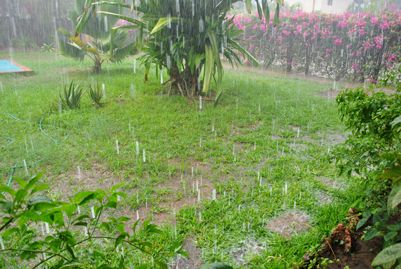
In Malindi and the Kenyan coast the rains are expected as a godsend. The drought has done extreme damage to the land and to the farms.
They are already dead cattle and many plants were reduced to dead branches.
In...
WEATHER
by redazione

This year's so-called "small rains" are very similar to the older sisters in May and June.
The abundant and continuous rainfall of these days...
NEWS
by redazione

The floods that have hit Nairobi in recent days also affected the Jomo Kenyatta International...
WEATHER
by Freddie del Curatolo
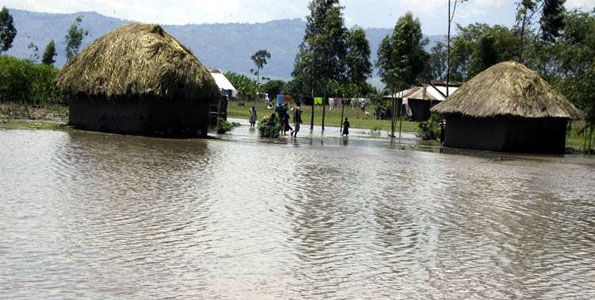
According to the most reliable "bernacas" of the coast, the fishermen of Lamu, the big rains will arrive just after...

No 'El Niño', just normal small rains. This is what we have to expect for the coming weeks in...
NEWS
by Freddie del Curatolo

After a month of traffic interruption and even "wild" detours in the centre of Malindi, the...

Seven days of the tail end of the small rains. This is what the Kenya Meteorological Service predicts...
CLIMATE
by redazione

Kenya is plagued by drought.
While the Nairobi Central Government is thinking of asking the natural disasters in the United Nations, to have extraordinary and unprecedented deal with an emergency appropriations, in the hinterland of the coast came the first...
SHORT RAINS
by redazione

Kenya has been in the grip of bad weather for days now. No dramas, were it not for the...
NEWS
by redazione

The first rains after many months of drought are always the worst. The people of Kenya know this, but...
WEATHER
by Freddie del Curatolo

Not only Tuscany and Italy. Unfortunately, the inclemency of the weather, in terms of continuous...

The 2021 rainy season in Kenya will be an atypical one, at least according to forecasts by local meteorologists. The...
METEO
by redazione

History repeats itself and for the poorest regions of Kenya it is always a drama.
After...


