
KENYA NEWS
15-10-2026 by Freddie del Curatolo

Second case of Ebola reported in Kenya, but according to the WHO there is no risk of an outbreak. The new patient is a close relative of the first case, the Kenyan national who had travelled from the Democratic Republic of the Congo and subsequently died.Closing borders to stop Ebola could have the opposite effect, driving travellers to use unofficial crossing points that are not subject to health checks. This is the warning issued by the World Health Organisation (WHO) representative in Kenya, Neema Rusibamayila Kimambo, who reiterated the UN agency’s opposition to blanket restrictions on the movement of people and goods.
“Our borders are very porous. If we close them, people will use unofficial routes and it will not be possible to screen them,” explained Kimambo during a media briefing on health emergencies.
According to the WHO, keeping official border crossings open enables the authorities to identify travellers potentially exposed to the virus more easily, carry out the necessary investigations and intervene promptly, without causing unjustified disruptions to economic activity.
The recommendation comes at a delicate time for Kenya, which on 6 October confirmed its first imported case of Ebola virus disease of the Bundibugyo variant. The patient, a Kenyan national living in the Democratic Republic of the Congo, had travelled to Kampala by land before flying to Nairobi, where he arrived on 3 October. He was admitted to hospital and died on 5 October.
The case has raised questions about the effectiveness of screening measures along the route taken by the man, who was coming from one of the areas affected by the outbreak. The incident has highlighted how difficult it is to rely solely on border controls for prevention, particularly when initial symptoms can be difficult to recognise.
The Kenyan Ministry of Health has stepped up surveillance activities, screening at points of entry and contact tracing for the patient. According to data released by the authorities, as of 6 October, over 652,000 travellers had been screened and 267 samples relating to suspected cases had been analysed.
Isolation facilities have also been identified in 27 counties considered to be at high risk, whilst efforts to strengthen the preparedness of healthcare staff continue.
Following confirmation of the imported case, the authorities identified 57 contacts linked to the patient. Ten people have been placed in quarantine, whilst efforts continue to trace other individuals who may have been exposed.
The WHO therefore recommends focusing efforts on epidemiological surveillance, the prompt identification of suspected cases, diagnostic testing and the monitoring of people who have come into contact with infected individuals, rather than on blanket lockdowns.
Meanwhile, in Laikipia County, health authorities have confirmed that two suspected cases under investigation have tested negative, helping to allay the concerns that had arisen in recent days in Nanyuki.
The WHO points out that the Bundibugyo virus is transmitted through direct contact with the blood and other bodily fluids of an infected person or with contaminated materials. There are currently no approved vaccines or specific treatments for this variant: prompt diagnosis, preventive measures and supportive care therefore remain essential.
The international agency’s position is clear: indiscriminate restrictions can undermine control measures, harm local economies and hinder public health response operations. For Kenya, the priority therefore remains to keep official entry points open and make them more effective, so that no potentially infected traveller can evade surveillance.


LATEST NEWS
by Freddie del Curatolo

For months, Kenya has been looking westwards, towards the Congo and Uganda, just as...
KENYA NEWS
by Freddie del Curatolo

Whilst confirmed cases of Ebola in the Democratic Republic of the Congo have exceeded a...
KENYA NEWS
by Freddie del Curatolo

All it took was one suspected case for Kenya to be added to the list of countries at high risk...
KENYA NEWS
by Freddie del Curatolo

Ebola has never been seen in these parts. Not a single case. And yet, on the slopes of Mount Kenya...
KENYA NEWS
by Freddie del Curatolo

Fears over the spread of the Bundibugyo strain of the Ebola virus – which kills one in two of those infected...
KENYA NEWS
by Freddie del Curatolo

For once, it seems that activists and human rights organisations have won. No...
KENYA NEWS
by Freddie del Curatolo

It is not a new online visa, nor is it an entry fee; it is not compulsory, but it saves you from...
EPIDEMIC
by Freddie del Curatolo

Every time Ebola breaks out in Central Africa, someone on the other side of the world cancels a trip...
EDITORIAL
by Freddie del Curatolo

Ebola – or rather this strain of the virus, known as Bundibugyo (and not ‘boogie boogie’ as someone...
KENYA NEWS
by Freddie del Curatolo

The number of people placed in quarantine in Kenya has risen to 10 following the confirmation of...
EDITORIAL
by Freddie del Curatolo
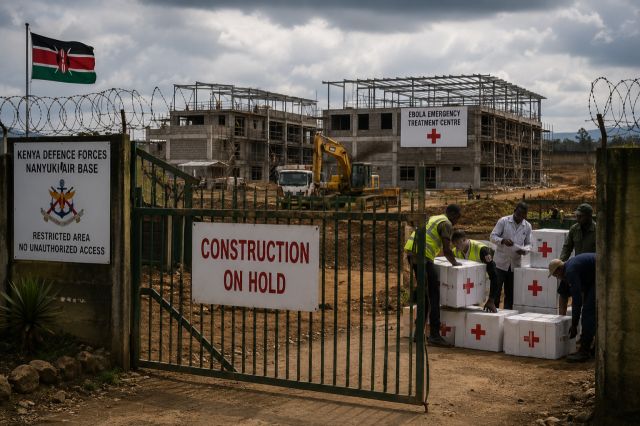
Kenya is safe enough to host a facility designed to assist American citizens potentially exposed to Ebola, but...

Whilst protests are taking place in Nanyuki against the planned Ebola isolation centre and Parliament is...
KENYA NEWS
by Freddie del Curatolo

A dramatic twist, in the finest tradition of that Africa depicted a century ago by Ernest Hemingway, who...
KENYA NEWS
by Freddie del Curatolo
For once, the figures seem to offer cause for hope. Five hundred and fifty-one people were tested within...
KENYA NEWS
by Freddie del Curatolo
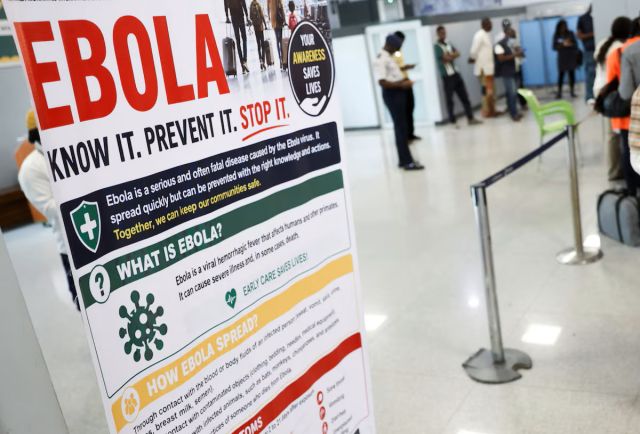
Kenya no longer has any patients undergoing treatment for Ebola or people in quarantine; it has begun...

