
KENYA NEWS
25-08-2026 by Freddie del Curatolo

In recent days, the prospect of the return of the prolonged atmospheric phenomenon ‘affectionately’ known as El Niño has once again made the front pages of the Kenyan media.
Headlines which, now that it has been established that the ‘child’ with the South American name is not one of Maradona’s heirs, are not content with that and are referring to ‘Super El Niño’. Translated from sensationalist jargon: torrential rains and the risk of further devastating floods, intended to remind the reader of what happened between 2023 and 2024 and, even earlier, in 1997–98, when Kenya was hit by exceptional rainfall that caused hundreds of casualties and extensive damage to infrastructure.
But are we really facing a foregone conclusion, or is the media hype in danger of turning into a form of climate propaganda? The answer, as is often the case, lies somewhere in between.
The forecasts are serious, but they are not a death sentence
International meteorological organisations and the Kenya Meteorological Department agree on one point: conditions in the Pacific Ocean are evolving towards an El Niño event that could become very intense between October and December 2026. According to current estimates, there is an over 80 per cent probability that the event will be classified as ‘very strong’ and that its effects may extend into the early months of 2027.
This, however, does not automatically mean that the whole of Kenya will end up under water.
The meteorologists themselves point out that the strength of El Niño is just one of the factors determining the course of the rainy season. Other climatic factors also come into play, such as the so-called Indian Ocean Dipole (IOD), as well as local terrain features and weekly atmospheric developments.
Memories of the floods fuel the fears of the poor
It is understandable that any mention of El Niño causes concern.
In recent years, Kenya has experienced increasingly extreme rainy seasons, culminating in the floods that hit vast areas of the country, with a particular impact on Nairobi, the Rift Valley and several coastal regions. Images of roads turned into rivers, collapsed bridges and evacuated neighbourhoods are still fresh in the collective memory.
For this reason, the authorities are emphasising the need to draw up emergency plans well in advance, rather than taking action once the damage has already been done.
What about the coast and tourist areas?
For those who live on or spend long periods on the coast, the question is inevitable.
Historically, El Niño events tend to bring above-average rainfall during the ‘short rains’ season, between October and December, even in coastal counties such as Kilifi. However, it is still impossible to determine how much rain will fall in Watamu and Malindi, in which weeks and with what intensity.
Seasonal forecasts indicate a higher probability of heavy rainfall, but they cannot accurately predict local extreme events, which will be monitored as the rainy season approaches.
Information or propaganda? This is where the debate arises.
On the one hand, it would be irresponsible to ignore the warnings from the scientific community. Preparing means clearing drainage channels, inspecting bridges and infrastructure, planning any civil protection measures and informing the public.
On the other hand, some sensationalist headlines seem to take a catastrophic scenario for granted, when the experts themselves speak of probabilities, not certainties.
That is the crux of the matter, on a continent where it is already well known that nothing is certain from one day to the next. Modern meteorology relies on predictive models (i.e. algorithms) that indicate more or less likely scenarios. A high probability calls for preparedness, but it does not amount to a certain prediction of disaster.
The real challenge for the country is prevention
Rather than asking whether this is propaganda, perhaps the right question is a different one: is Kenya better prepared today than in previous years?
If the warnings prompt local authorities to clear drainage systems, secure areas at risk, monitor watercourses and inform the public promptly, then even an alert that turns out to be ‘exaggerated’ will still have served a purpose.
If, on the other hand, it all amounts to nothing more than a string of alarmist headlines without any concrete action, there is a risk of fuelling public mistrust in the warning systems themselves.
For the time being, therefore, the most balanced conclusion is this: the concern is justified, because it stems from scientific data and climate models recognised internationally. But to speak today of an inevitable new disaster would be premature.
As is always the case with the weather, caution is essential. Catastrophism, on the other hand, helps no one.


WEATHER
by redazione

Summer is (already) coming to an end, at least in inland Kenya, from Nairobi to the Rift...
WEATHER
by redazione

It will be the latest tailspin of the El Niño cyclone that Kenya is currently experiencing, according to...

Seven days of the tail end of the small rains. This is what the Kenya Meteorological Service predicts...
METEO
by redazione
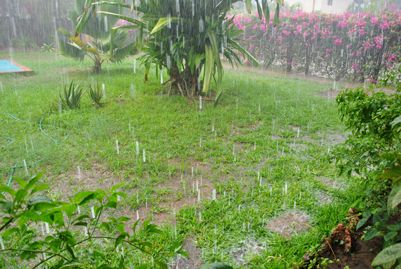
In Malindi and the Kenyan coast the rains are expected as a godsend. The drought has done extreme damage to the land and to the farms.
They are already dead cattle and many plants were reduced to dead branches.
In...
WEATHER
by Freddie del Curatolo

These little, little rains.
Once upon a time, the...
KENYA NEWS
by Freddie del Curatolo

It's raining early, it's raining hard, it's raining where normally at the end of February you...
NEWS
by redazione

The floods that have hit Nairobi in recent days also affected the Jomo Kenyatta International...
KENYA NEWS
by redazione

An exceptional weather event for the usually regular and quiet Malindi, from this point...
WEATHER
by redazione

Temperatures are still below seasonal averages but rainfall is on the wane, Kenya's meteorological...
KENYA NEWS
by redazione

The floods in Kenya, which according to meteorologists and the government are not yet over and...
KENYAN TOURISM
by Freddie del Curatolo

Traditionally, at least since Kenya made tourism one of its main economic resources – particularly due...
WEATHER AND RISKS
by redazione

The bad weather emergency in Kenya now also threatens to bring flooding to the coastal strip, swelling...
WEATHER
by redazione

According to national meteorologists, the weather on the Kenyan coast is finally...


