
WILDLIFE
04-12-2025 by redazione

They say that an elephant never forgets – and apparently, it can also learn to adapt to drones.
Once considered a source of alarm, drones are now proving to be surprisingly “elephant-friendly” and an increasingly valuable research tool. In the past, their use in elephant conservation was based mainly on their ability to disturb: elephants tended to flee from their buzzing, making them useful for chasing them away from cultivated fields.
Now, a new study published by Save the Elephants (STE) and the University of Oxford, coordinated by Italian researcher Giacomo D'Ammando, shows that elephants can learn to ignore drones, a discovery that could change the way scientists and conservationists monitor wildlife.
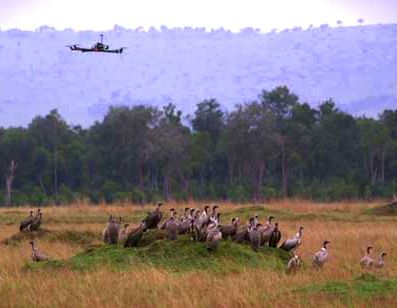
Drones, or remotely piloted aircraft, have become increasingly important for zoological research. With their buzzing propellers – reminiscent of a swarm of bees – they have often been used to scare elephants away from farms. But when flown in a way that minimises disturbance, the animals quickly learn to ignore them.
And that's good news for science. Since the 1960s, when Iain Douglas-Hamilton began studying the behaviour of wild elephants, observations have always been conducted from the ground, from vehicles or from elevated platforms. Drones now offer a completely new perspective on what happens within a herd.
This bird's-eye view opens up the possibility – for the first time – of accurately quantifying how individuals in a group interact in different situations. Built-in cameras and sensors collect vast amounts of data, which artificial intelligence-based software can analyse to look for patterns that have so far escaped the human eye.
The new study, published today in Scientific Reports, confirms that a drone flying high and steadily only temporarily alters the behaviour of elephants – if it produces any reaction at all. The team has already obtained fascinating clues about the sleeping habits of elephants at night and is about to release a tool that can automatically determine the age and sex of each individual observed.
The research, supported by the Colossal Foundation, combines Save the Elephants' more than 30 years of field experience with cutting-edge technology, expanding our understanding of a species as complex as elephants.
‘Biodiversity is in crisis, but we are not standing still,’ said Frank Pope, CEO of Save the Elephants. ‘New technologies are expanding our ability to perceive, analyse and understand the natural world in ways that were previously unimaginable. This study promises to open a new window into the way elephants live.’
The researchers conducted 35 tests with quadcopter drones on 14 families of elephants individually recognised in the Samburu and Buffalo Springs reserves in northern Kenya. About half showed mild signs of disturbance at first exposure – mainly raising their trunks or interrupting their activity – but these reactions quickly faded within six minutes and were reduced by 70% in subsequent flights.
‘The way the drone is flown is crucial,’ explains Angus Carey-Douglas, lead author of the study for Save the Elephants. ‘Not all elephants were disturbed, and those that were became less and less agitated during the same flight and repeated exposures. The data also suggest that this habituation process can last for many months, if not years, confirming the learning and adaptation abilities for which elephants are already well known.’
This habituation makes drones a non-invasive and cost-effective observation platform, useful for collecting data on elephant movements, social interactions and responses to environmental changes with minimal impact. Advanced drone monitoring is already revealing new behaviours and helping conservationists better understand elephant life, thereby contributing to more effective protection strategies.
‘This research demonstrates the power of a new and rapidly evolving technology that allows us to delve deeper and deeper into the secret life of elephants,’ says Fritz Vollrath, president of Save the Elephants and co-author of the study. ‘For example, the on-board thermal camera reveals the darkness of the night, allowing detailed studies of nocturnal behaviour and sleep patterns.’
‘We are proud to partner with Save the Elephants in using cutting-edge technology to protect wild elephants,’ adds Matt James, Executive Director of the Colossal Foundation. ‘This partnership demonstrates how innovations developed for de-extinction can have an immediate impact on the protection of living species, showing that tools created to bring the past back to life are just as crucial for safeguarding current biodiversity.’
However, researchers emphasise that the use of drones in conservation – already widespread, for example, in the study of marine mammals – must always be strictly regulated. In Kenya, tourist and recreational drone flights are prohibited in national parks and reserves to protect wildlife from unnecessary stress. The drones used in this study operated under special permits issued by the Kenya Civil Aviation Authority and the Wildlife Research and Training Institute. Piloting drones requires a series of permits that must be obtained from the Kenya Civil Aviation Authority and, of course, the Kenya Wildlife Service and the Wildlife Research and Training Institute for wildlife research purposes. The use of drones is strictly controlled. At Save the Elephants, drones are used exclusively for research and conservation purposes, in collaboration with the reserve and Samburu County, and Save the Elephant is always very careful not to interfere with the activities of tourists visiting the reserve.
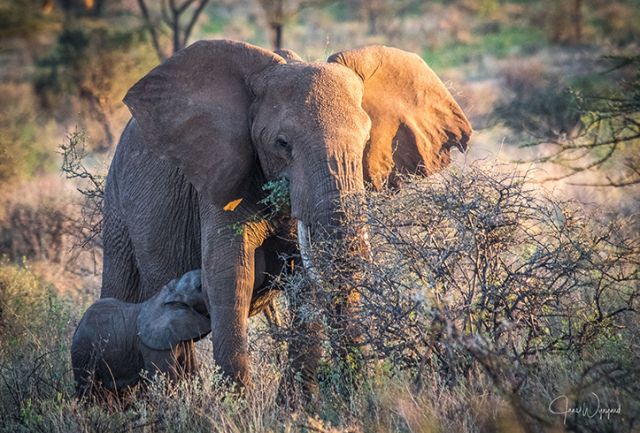
(photo by Jan Wyniard)


WILDLIFE
by redazione

African elephants are starting to be born without tusks, as a genetic protection to avoid being killed by...
WILDLIFE
by Leni Frau
The story of the matriarch Monsoon, a female elephant from the Samburu region, is one to be told, to...
NEWS
by redazione
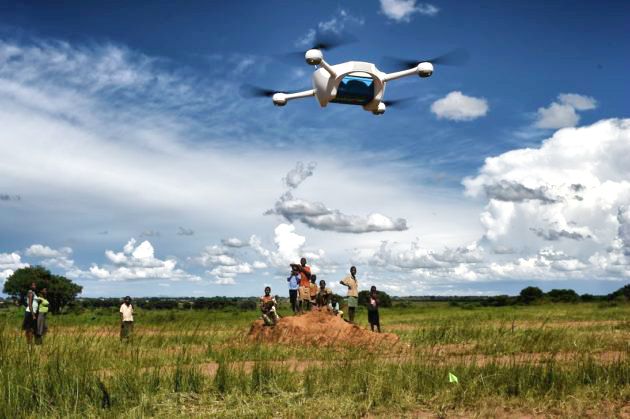
The Kenian Civil Aviation is about to open to the use of drones for non-military reasons.
Soon in the...
ENVIRONMENT
by Freddie del Curatolo

Unlike man, who as the italian musician Franco Battiato sang ‘is the most domesticated and...
WILDLIFE
by Leni Frau
From one of the most remote and fascinating national reserves of Kenya, Samburu, comes...
NAIROBI EVENTS
by redazione

A truly special Italian event is taking place this month, on Tuesday, March 24: together....
WILDLIFE
by redazione

Research by Colorado State University (CSU) scholars carried out in Kenya together with the organisations...
WILDLIFE
by Leni Frau
He died peacefully, for causes defined as natural by the experts of the association "Save the Elephant" in the ...
NEWS
by Adriano Ghirardello, Honorary Warden KWS
The "boom" of unmanned drones with which to film scenes from the top and up close, is likely to create problems to the animals in the savanna and to those who use them, given that Kenya is illegal. To use...
WILDLIFE
by redazione

Some of the most eminent international zoologists and conservationists called in a letter published in...
NEWS
by redazione

In an official statement reported in Kenyan media, the Kenyan Civil Aviation Authority (KCAA) confirmed...
ITALIANS IN KENYA
by Freddie del Curatolo
MOURNING
by Freddie del Curatolo

There are nights in Nairobi when the wind seems to carry with it an ancient mourning, a sigh that comes...
FAUNA
by redazione

Which is the living thing elephants are most afraid of?
In the collective...


