
WILDLIFE
18-11-2026 by Freddie del Curatolo
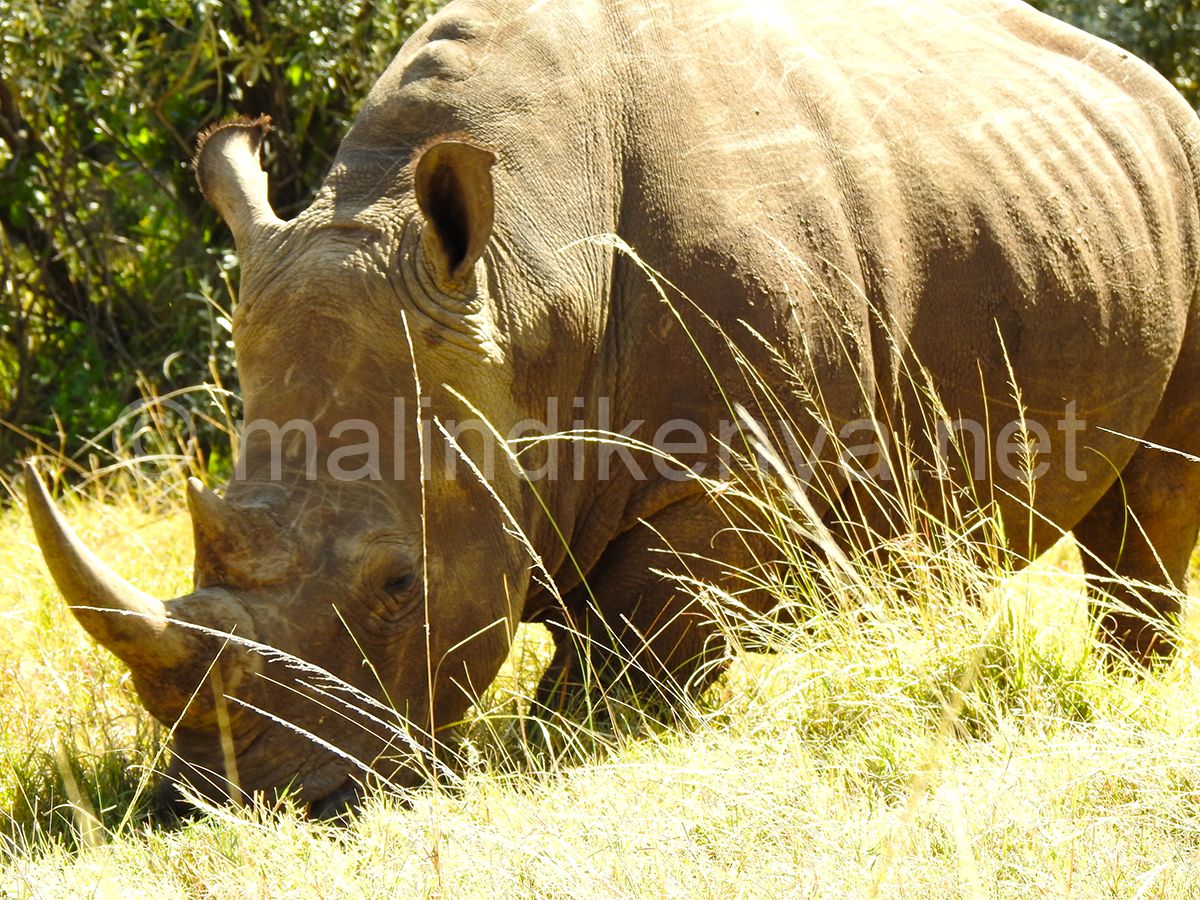
In Kenya, even good news can sometimes mask a problem, just as there is always a silver lining to bad news. In this case, we are looking at rhinos, whose numbers have recovered to the point where they are now posing a challenge to the reserves that have protected them from poaching and extinction for decades. A triumph for nature, at least on the surface, which is now presenting an unexpected challenge: there is a lack of space, food is dwindling and coexistence amongst the animals is becoming more difficult.
To understand the scale of the situation, we need to go back almost forty years.
In 1970, Kenya was home to around 20,000 black rhinos, according to figures cited by the Kenya Wildlife Service. However, the international trade in horns (used as aphrodisiacs by the Chinese…), poaching and hunting had triggered a catastrophe.
By the late 1980s, fewer than 400 remained.
Intensive conservation efforts, the creation of protected sanctuaries, the work of rangers, veterinary monitoring and collaboration between public institutions and private reserves have gradually reversed the trend.
The most recent figures from the Kenya Wildlife Service indicate that, as at 31 December 2025, the country had a population of 2,282 rhinos: 1,147 black rhinos, 1,133 southern white rhinos and just two northern white rhinos. This natural heritage places Kenya amongst the world’s leading countries for the conservation of these large mammals.
This figure should also be viewed in the context of the increase recorded in the national census: at the end of 2024, the population stood at 2,102. In just one year, therefore, the total population has increased by 180 animals.
However, this increase in numbers does not automatically mean that the species now enjoys better conditions for survival. On the contrary, it is precisely this growth that is giving rise to new challenges.
The 17 deaths at Ol Pejeta and the food problem
The news that brought the issue back into the spotlight came from Ol Pejeta, in Laikipia County. The reserve reported that between 26 February and 12 November 2026, 17 black rhinos died.
This figure might suggest a new wave of poaching, but the conservancy’s management has ruled this out. No incidents of illegal killing were recorded, and all deaths were attributed to natural causes.
The documented or suspected causes include five cases of predation by lions, four deaths due to old age, two cases of ‘downer syndrome’ (similar to that seen in horses), two cases of illness and one drowning (it is not known whether this was voluntary, due to depression). For a further three animals, the causes have not been determined.
Some animals were particularly old, with estimated ages of around 39 and 42 years.
But the problem is not limited to mortality. Ol Pejeta is currently home to 178 eastern black rhinos, 55 southern white rhinos and the last two northern white rhinos (females). The black rhino population already exceeds what the reserve considers sustainable for its habitat, provisionally estimated at around 120 individuals. This assessment is currently undergoing scientific review.
One figure in particular is cause for concern: the decline of one of the black rhinos’ main food sources, the thorny acacia known as the whistling thorn. According to the reserve’s internal assessments, this vegetation has declined by over 80 per cent across the entire area and by more than 90 per cent in the eastern sector.
The situation is exacerbated by the spread of other shrub species, such as Euclea divinorum, which are less palatable to these animals, as well as the pressure exerted by grazing and repeated browsing.
The climate has also played a part. Between April and October 2026, Ol Pejeta received 298.4 millimetres of rainfall, approximately 56 per cent of the average recorded over the same period between 2020 and 2025.
The result is an ecosystem struggling to sustain all its inhabitants. The reserve is already taking action through supplementary feeding, veterinary care and studies into the animals’ diets, but above all it is calling for the expansion of protected areas and the restoration of vegetation.
Not just at Ol Pejeta: the new frontier is clashes between rhinos
The problem of overpopulation and territorial competition is not confined to a single reserve.
Last September, the Director-General of the Kenya Wildlife Service, Erustus Kanga, sounded the alarm over calf mortality, explaining that territorial clashes between rhinos – particularly among male black rhinos – can lead to the death of calves.
According to the data he presented, over 280 rhinos were born in Kenya in 2023 and more than 260 in 2024. Kanga had asked his staff to verify the fate of over 500 calves born over the two years, but only around a hundred were recorded in the registers cited during his speech.
This does not mean that the other 400 have necessarily died: the figure highlights a difficulty in tracking and documenting their survival. But this is precisely the point. With a growing population, individual monitoring becomes essential, and simply counting births is no longer enough.
Adult males may kill calves that are not their own offspring, particularly in territories where competition for space and females becomes more intense.
Conservation must therefore tackle a new challenge: ensuring that calves not only are born, but manage to reach adulthood.
Tsavo West: the answer lies in expanding the boundaries
One of the most significant responses came from the Kenya Wildlife Service itself, which in December 2025 inaugurated the expansion of the Tsavo West black rhino sanctuary, making it the largest in the world.
The new protected area covers approximately 3,200 square kilometres. It was also established to address the difficulties faced by the previous Ngulia sanctuary, where around 150 rhinos were concentrated within just 92 square kilometres.
The project includes 240 kilometres of security fencing, 47 new water points and electronic monitoring systems. Some of the animals have been relocated to the new area, giving them access to larger territories.
This is a concrete example of Kenya’s new strategy: not merely protecting animals where they are found, but creating new habitats where they can live and breed without exceeding the ecological carrying capacity of the land.
The return of black rhinos to Loisaba, in the Laikipia region, is also a significant achievement. Following the relocation of 21 animals in January 2024, the local population has grown to 30, thanks to the birth of nine calves.
Further relocations have contributed to the creation of new breeding populations, including at Segera. Ol Pejeta itself has provided animals for these programmes.
Kenya is therefore seeking to distribute its rhino population more evenly, preventing a few reserves from becoming overcrowded ‘islands’.
Najin and Fatu, the last two northern white rhinos: the end of a species?
Then there is a story that makes rhino conservation in Kenya about much more than just numbers.
Ol Pejeta is home to Najin and Fatu, a mother and daughter aged around 35 and 24 respectively. They are the last two northern white rhinos left in the world. There are no longer any living males, and the subspecies is now functionally extinct in terms of natural reproduction.
These animals once inhabited various regions of Central Africa, including Uganda, Sudan, Chad, the Central African Republic and the Democratic Republic of the Congo. Hunting and poaching have gradually wiped them out in the wild.
Sudan, the last male of the subspecies, died in 2018 at Ol Pejeta. Before him, Suni had died in 2014, along with other individuals who had been moved into captivity in an attempt to save them.
Today, hope rests with scientific research.
The international BioRescue project, in which the Kenya Wildlife Service, Ol Pejeta, European research institutes and the University of Padua are also participating, is working on assisted fertilisation and the production of embryos to be implanted into female southern white rhinos, which would act as surrogate mothers.
In April 2026, the consortium announced the production of a new embryo derived from an egg cell collected from Fatu earlier that year. The total number of pure northern white rhino embryos produced has thus risen to 39.
However, the pregnancy that could change the history of the species has not yet materialised. Three embryo transfers carried out in the second half of 2025 did not result in long-term pregnancies. To increase the chances of success, two further southern white rhino females have been introduced into the programme to serve as surrogate mothers.
Najin, for reasons related to her age and physical condition, is no longer taking part in oocyte collection. Fatu, on the other hand, is the key player in the reproductive part of the programme.
The prospect of one day returning these rhinos to their native habitats remains a distant one, but it has not been abandoned. The stored embryos represent a real, albeit still experimental, possibility of rebuilding a population.
The future is not just about horns
The story of the Kenyan rhinos illustrates just how much the nature of conservation has changed. For years, the top priority was to prevent poachers from killing the animals to fuel the illegal horn trade. Kenya has achieved significant results, recording zero incidents of poaching in 2025 and during the first nine months of 2026, according to data from the Kenya Wildlife Service.
Now, however, the challenge has shifted. We need land, vegetation, water, ecological corridors, new reserves and scientific population management. And we need sufficient financial resources to sustain all this over the long term.
It is no longer enough to ask how many rhinos have been born, how many have survived or how many horns have been secured. We must ask ourselves whether the African land still available to wildlife is capable of supporting them.
The paradox is that, having risked losing the rhinos due to human activity, Kenya must now prevent them from being suffocated by the gradual reduction of the natural habitats in which they can live.
And whilst Najin and Fatu continue to represent the last fragile testament to a subspecies that could disappear forever, their fellow rhinos face a different battle: not merely to survive, but to find enough of Africa to continue to exist.


WILDLIFE
by redazione

It's been almost six years since a rhinoceros was killed by poachers at the Lewa Conservancy in...
WILDLIFE
by Leni Frau

The world's first successful embryo transfer in rhinos, thanks to research carried out by a Cremona-...
FAUNA
by redazione

In this period of drama for mankind, Nature continues to give us reasons to hope in the beauty of this world that ...
WILDLIFE
by Freddie del Curatolo

Najin and Fatou are a mother and daughter who live in the Ol Pejeta reserve in Kenya. They...
CONSERVATION
by Freddie del Curatolo

There was a time when the problem of rhinos in Kenya was, in theory, very simple: to...
NEWS
by redazione

Thanks also to Italy, the northern white rhinoceros, a very rare species of which only two...
WILDLIFE
by Leni Frau

The attempt to save the now very rare species of the white rhinoceros of northern Kenya, of ...
ENVIRONMENT
by Leni Frau

Mount Kenya animal rights activists are calling on all residents and environmental groups to defend the...
PLACES
by Leni Frau

A stay at Saruni Mara is not a safari like any other.
First ...
WILDLIFE
by Leni Frau

From Kenya comes one more hope for not seeing the northern white rhino, a species that has no...
WILDLIFE
by Leni Frau

The year of the rhino. The year 2020 for conservation in Kenya will be remembered as the first...


