
AFRICAN HISTORY
21-10-2025 by Freddie del Curatolo

October 1945. The war was over, Europe was still counting its dead and polishing the statues of the victors, when a group of Africans (and Africanists from the Caribbean) decided to meet in a suburban town hall in Manchester.
Not to celebrate peace, but to demand their own.
It was the Fifth Pan-African Congress, a week that went almost unnoticed in England but resonated like a drumbeat across the African continent.
There, between English tea and the echo of factories, the idea of a free Africa took shape for the first time.
Pan-Africanism, a grand word for an ancient dream, was born from the idea that black people around the world could unite against injustice and colonialism. At the time, it was more a faith than a philosophy, based on a simple idea: Africans, wherever they were born or deported, had a common destiny to reclaim. They had already dreamed of this in London, Paris and New York, at previous congresses, but never with such concreteness and anger. Manchester offered a more sincere base: a tough, dirty, working-class city, where the words “equality” and “rights” still had calluses on their hands.
No parades, no flags. Just delegates who had come from afar, with light suitcases and heavy ideas. Names that the world would later learn to pronounce arrived from every corner of the black world. There was Jomo Kenyatta, who would one day lead Kenya to independence. Kwame Nkrumah, who would do the same in Ghana. Hastings Banda, future president of Malawi. And then there was Jamaican Amy Ashwood Garvey, who spoke of feminism when no one was listening, and Trinidadian George Padmore, considered the political brain of the movement. Holding them together was veteran W.E.B. Du Bois, an African-American journalist and thinker who, as early as 1919, had dared to say that the century would be “the century of the struggle of colour”.
After years of meetings in cities symbolic of the empire – London, Paris, Lisbon, New York – the movement found refuge in working-class Manchester, where a small but solid Afro-Caribbean community already existed.
Ras Makonnen, an Ethiopian entrepreneur with restaurants and clubs scattered throughout the city, made his world available: food, rooms and contacts.
Together with Padmore and the African-American thinker W.E.B. Du Bois, he organised the congress as one organises a revolution with an empty wallet: in a municipal hall, with ideas that no longer fit in the colonies.
More than two hundred people discussed, protested and dreamed for a week. The demands were clear: an end to colonial rule, racial equality, economic justice and fair wages. Reading them today, they still seem like an electoral programme waiting to be implemented.
It was not an immediate flash of inspiration, but the seed took root. From that grey room in Manchester, independence movements were born which, within twenty years, liberated much of Africa. Nkrumah in Ghana and Kenyatta in Kenya had heard the same words and understood the same thing: that freedom is not asked for, it is taken. The rest is history, but rarely told. Over the next twenty years, the countries represented in Manchester began to march out of the empire like students bored by a lesson.
Thirty years later, in 1974, the next congress was held in Dar es Salaam, when the map of Africa was already full of new flags. Nineteen countries had emerged from the shadow of the British Empire. In Manchester, only a plaque remained to commemorate that week that changed history without changing the city.
Today, eighty years later, Manchester is preparing to commemorate that meeting that no one photographed enough. There will be conferences, talks and high-sounding words about liberation and self-determination. But the truest memory remains what cannot be seen: a group of men and women who, between English rain and a cup of tea, decided that Africa would never go back.


ANNIVERSARY
by redazione

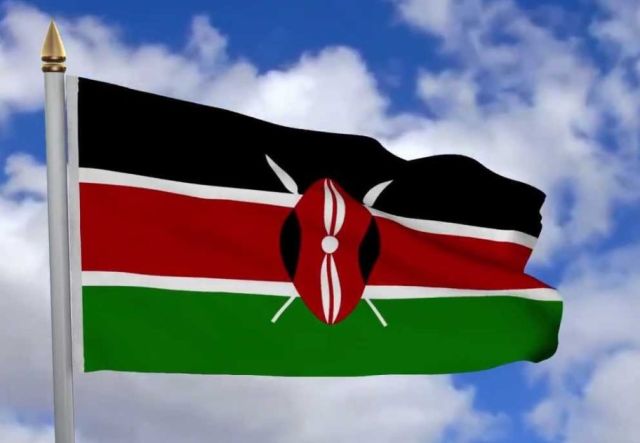
Today is a national holiday in Kenya. It is the celebration of the "Jamhuri Day". It's the day of the Republic, which is the date in which officially entered into force before the Constitution of the Republic of Kenya, 12...

Fifty-four years ago on June 1, 1963, the Kenyan Shadow Government, with President Jomo Kenyatta, forged the first excerpt of the Constitution of Kenya, which would then come into force on 12 December of the same year.
That is why...
PUBLIC HOLIDAY
by redazione

Today is a special day in Kenya, celebrated with a national holiday.
It is...
EDITORIAL
by Freddie del Curatolo

‘Africa must learn to finance its own development with Africans’ own money’...
ANNIVERSARIES
by Freddie del Curatolo


Today is a national holiday in Kenya. In fact, ‘Jamhuri Day’ is celebrated.
It is...


