
KENYA NEWS
14-04-2026 by Freddie del Curatolo

What happens to Kenya and Kenyans if they run out of condoms? This isn’t a question for a safari bar, nor an exercise in tropical moralizing.
It is a concrete, measurable public health issue. Because in a country where more than 1.5 million people are living with HIV, taking away condoms doesn’t mean increasing births—it means opening the door to epidemics once again.
The suspension of U.S. funding for health programs—particularly those related to the prevention of HIV and sexually transmitted diseases—is having an immediate and tangible effect in Kenya: a shortage of condoms.
This is not a matter of perception. Supplies are dwindling rapidly, and according to various health sources, many counties could find themselves with reserves limited to just a few months.
The problem is structural: Kenya needs hundreds of millions of condoms every year, but domestic production and distribution cannot meet the demand.
For years, the gap has been filled by international aid, especially from the U.S.
Now that mechanism has ground to a halt.
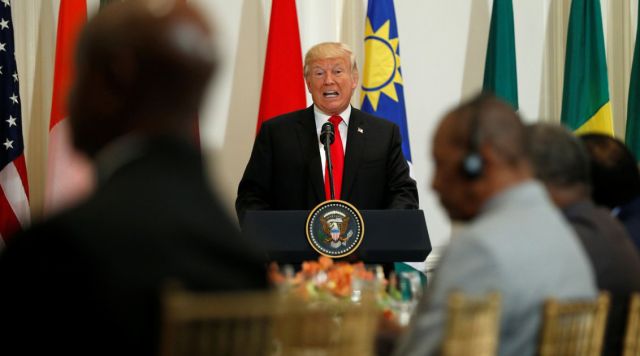
The “not a single dollar more for condoms” declared by the ever-present Donald Trump is emblematic of an unresolved, bigoted provincialism, by virtue of which the deranged president aims to keep ultra-Catholics on his side. Creating the conditions for millions more chronically ill people who will then need help getting treated, in exchange for sensitive patient data. Even though some African states have so far rejected Washington’s healthcare agreement, which provides precisely this: funds in exchange for access to the national medical system’s databases, to then resell them to marketing and the almighty Algorithm..
It is therefore not a matter of sex, but of health.
Reducing the issue to “fewer condoms, more children” is a typically Western mistake.
In Kenya, the condom is first and foremost a health barrier.
It serves to prevent HIV, sexually transmitted infections, and, only secondarily, unwanted pregnancies.
The country still has one of the most significant HIV epidemics in the world: approximately 1.4 million people are living with the virus, and new infections are recorded every year.
Over the past twenty years, thanks to awareness campaigns, free condom distribution, and access to medications, the numbers had improved dramatically.
But these advances hung by a fragile thread: external funding, international logistics, and political continuity.
It takes very little to break it.
The Trump administration’s decision to freeze or scale back several global health assistance programs has had a ripple effect.
Not just on condoms.
In recent months, there have been delays in the distribution of antiretroviral drugs, clinic closures, and cuts to prevention programs.
The system, built to function with heavy reliance on external support, suddenly found itself running out of fuel.
And when prevention stops, the consequences come later. But they do come.
The real risk is taking a step backward, creating the conditions for those struggling to feel like they’re moving forward.
The lack of condoms does not produce an immediate, visible emergency, like a famine or a flood.
It produces something more insidious: more unprotected sex, more infections, more silent transmissions.
Especially among the most vulnerable groups: sex workers, young people, marginalized urban communities.
In Kenya, where HIV prevalence remains extremely high in certain groups, even a brief interruption in prevention efforts can lead to a significant rise in infections.
And this means only one thing: years of progress risk being wiped out.
There is also a misunderstanding, almost ideological in nature.
For some in American politics, the condom is still viewed as a cultural symbol, a moral issue.
In Africa, however, it is a matter of survival.
It is not sexual freedom. It is public health.
It is not ideology. It is a statistic written in the blood of poor people.
And now?
The Kenyan government is trying to take remedial action, but resources are limited, and delays in the supply chain cannot be resolved by decree.
Meanwhile, in clinics, on empty shelves, the gap between geopolitical decisions and daily life is measured.
A gap measured in kilometers, certainly.
But above all, in consequences.
Because taking away a condom in Kenya doesn’t mean stripping armor from a warhorse.
It means disarming salvation.


KENYA NEWS
by Freddie del Curatolo

The situation in Kenya is alarming, and even more so since Donald Trump's American government...
POLITICS
by redazione

And came the first call of the American President Donald Trump to fellow Kenyan Uhuru Kenyatta.
A month and a half after setting the White House and in the midst of meetings and implementation of its government's plan, the leaders...
EDITORIAL
by Freddie del Curatolo

Kenya is with Kamala Harris. This emerges from a thorough research we did, reading opinions of...
ECONOMICS
by redazione

The Central Bank of Kenya (CBK) revealed in recent days that the Kenyan shilling is...
ECONOMICS
by Freddie del Curatolo

Kenya is one of the countries in Africa least taxed by the US government, and also...
CORONAVIRUS
by redazione

Few tests in the last 24 hours but the percentage of positives in Kenya remains the same, with 95 ...
HEALTH
by Freddie del Curatolo

One of Italy's leading health groups will work with Kenya to improve the country's health system, which...
by Freddie del Curatolo

The total freeze on foreign aid announced and implemented overnight by Donald Trump for the...
HEALTH
by redazione

Ruaraka Uhai Neema Hospital, run by the NGO World Friends, has been recognized as the...

Nothing seems to be able to dent the strength of the Kenyan shilling in recent months. These days...
EDITORIAL
by Freddie del Curatolo
The US elections are not as far from Nairobi as one might think. Thousands of kilometres from the...
ECONOMICS
by Freddie del Curatolo

The Kenyan shilling remains solid and strong against the dollar, keeping the US currency used for trade at...
EDITORIAL
by Freddie del Curatolo

If there was a good time for Italians to focus on East Africa, and Kenya in particular, not only as...
KENYA NEWS
by Freddie del Curatolo

From today – or rather, from this January – foreign doctors are no longer welcome. Or...


