
AGRICULTURE
14-03-2025 by Freddie del Curatolo

From the point of view of the produce from its land, is Kenya still a healthy country?
Those who approach this country arriving from Europe, and especially from the cities, are surprised and intoxicated by tasting the fruit and certain vegetables in which they rediscover the flavours of when they were children (for boomers) or discover the true taste of products that they usually buy from large retailers.
Of course, this is not automatically synonymous with authenticity, as there can also be a role played by cargo ripening, the fact that they come from mass crops suitable for large numbers and so on.
Those who visit Kenya often still find the ‘from producer to consumer’ dimension, the famous ‘zero kilometre’ that in Italy is so cool that it often costs twice as much and convinces many that it's better to get used to tomatoes and courgettes that don't taste of anything.
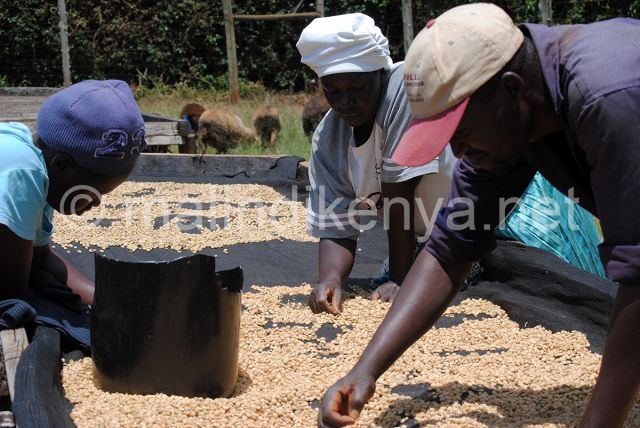
But to what extent is the farming tradition in Kenya, which still involves 40% of the population and as much as 70% in rural areas, still respected despite the pollution of the water table, the air and pesticides and fertilisers that are not always the latest generation?
According to some experts and optimists, the answer is still positive.
These are the same people, including many trade associations, who rejoiced at the decision a few days ago of the Nairobi Court of Appeal, which upheld the appeal against the government's removal of the ban on the production and export of genetically modified products.
It therefore seems that for now the battle against GMOs, which began in 2012 and was suddenly reopened with the inauguration of the current president William Ruto, has been brought to an end. Ruto is an agronomist and made a return to and strengthening of agriculture one of the cornerstones of his electoral campaign.
In Kenya ideological battles and political and demagogic challenges are rarely discussed, here economic interests are openly and directly at stake, but it's also about feeding the people.
The first to succeed in combining these two elements (their own economic interests, and those of their caste, of course, and making their people's bellies a little fuller) will have hit the jackpot.
So Ruto must have thought that to solve the problem of food insecurity (according to this year's FAO data, 4 million Kenyans will suffer from it during this rainy season, including 1 million children) and at the same time take advantage of the contributions of the Bill and Melinda Gates Foundation, who have made the spreading of GMOs around the world one of their flagships and who are very keen to be sponsored by multinationals to help emaciated children and suffering mothers in developing countries.
Kenyan farmers, however, don't agree. They believe that Kenya is not ready to receive modern variations to their millenary tradition that, beyond today's troublesome climate changes, have resisted every storm in the past and have always ended up feeding the families, for whom the cultivated fields are their only guarantee against poverty. And just ask those who have moved to the city, perhaps having sold that little piece of inherited land, and are more than in trouble.
‘The discussion about GMOs brings us back to our history, to who we are and that it can't be changed by a sentence, nor by a radical change,’ explains Dennis Andaye, president of the organic markets of Kenya, which recently formed an alliance with the Italian Coldiretti. ’For example, my grandmother is eighty years old and she still grows her vegetables and leaves in the family field. She uses traditional methods to grow them and protect them from insects, animals and the climate. She didn't study to do this, she relies on the teachings of her parents and the community and above all she knows her land like the back of her hand. We don't have the authority to say that genetically modified organisms are bad, but Kenya would certainly not be prepared to revolutionise an agricultural production system that has been going on forever and feeds millions of people; there would certainly be more problems than advantages. Instead, we can focus on using the most natural substances possible to improve our crops, sustainable fertilisers and pesticides, and continue with the chain of sustenance and circular economy that has always allowed us to survive: firstly, produce for ourselves and our family, then exchange our products with our neighbours and finally, if we can produce more, go and sell them at the market, focusing on good, healthy products’.
It's likely that Kenya isn't ready for GMOs, but there are other important challenges to overcome in order to define its products as healthy. This is the opinion of Luca Alinovi, who has been in Kenya for many years, a former senior regional manager of the FAO and now one of the creators of Aflabox, a revolutionary start-up that gives even small farmers the possibility to check the levels of aflatoxins in the products of their land and act accordingly.
‘Speaking as a man of science,’ explains Alinovi, ’I can say that it is now widely accepted that GMOs do not harm humans, but this does not mean that they should be exported as a model of sustainable agriculture to Africa, and above all that they will take root there. The experiment was conceived and put into practice based on the American model of crops in Texas; the Kenyan terrain, for example, its climate and other issues, are completely different. It would be like wanting to drive a Ferrari on African dirt roads at all costs. Moreover, it's a conversation that distracts from the real problems facing agriculture in this country, such as the levels of aflatoxins in food, which require systemic intervention and which we have been fighting to control for some time’.


ENVIRONMENT
by Leni Frau

MADE IN ITALY
by redazione

Starting tomorrow, Friday 27 June, Nairobi will host the “World Wine Weekend”, a three-day international...
EVENTS
by redazione

The Fishing Club starts 2022 with its first monthly market where you can find a little bit of...
EVENTS
by redazione

With the first Saturday of March the monthly market of Malindi is back at the Sea Fishing Club, where...
EVENTS
by redazione

The low tourist season and the first rains certainly don't stop the monthly market of Malindi at the...
EVENTS
by redazione

It happens every first Saturday of the month: the traditional Farmer's market takes place at Driftwood Club in Malindi, with its organic and natural products. From the first morning, the meeting is at the garden of the wonderful resort near the indian ocean, on...
EVENTS
by redazione

As every first Saturday of the month, the traditional market of handicrafts and organic and...
EVENTS
by redazione

The first Saturday in August sees the return of the monthly market in Malindi at the Sea...
COOPERATION
by Freddie del Curatolo

Concrete help to the populations of one of the most troubled areas of Kenya, West Pokot, thanks...
EVENTS
by redazione

Back again this month the traditional market of handicrafts and organic and natural products at...
ECONOMICS
by Freddie del Curatolo
From now on, it will be possible from Kenya to export products to 27 European Union countries duty-free, to...
EVENTS
by redazione

Tomorrow, Saturday 2nd October, Malindi will once again meet in the name of sharing, the exhibition...
Low rainfall during Kenya's cold season means a shortage of maize meal, the main staple...


